


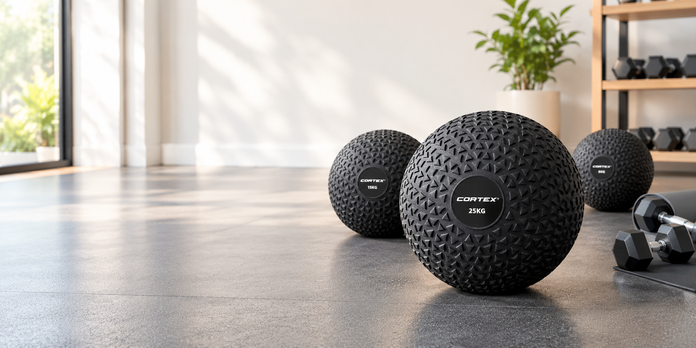
A slam ball looks like the easiest bit of kit in the gym. Lift it, throw it at the floor, then just repeat. No settings, no cables, no instructions. That’s the trap. The movement is quick, the ball is heavy, and your whole body is working at once, so a small technique slip adds up fast. I’ve seen people finish a round of slams feeling great, then spend the next three days wondering why their lower back hurts.
It’s still one of the most satisfying ways to train. You get power, core work, along with a proper sweat in about ten minutes, and nothing beats slamming a ball into the floor after a lousy day at work. Before you buy fitness equipment online or start throwing weight around the garage, it’s worth spending a few minutes on the basics.
Understanding Proper Slam Ball Technique Before You Begin
Control comes first. Power follows. Mastering explosive training starts with a solid foundation that is built on control, coordination & the right exercise equipment setup. Get a feel for how your body should move on the way up, then the way down, and the force shows up on its own. Three things are worth sorting before your first rep.
- Choosing the right weight: It is important to select a ball weight which allows smooth, controlled repetitions without compromising your form or bending your back. While you think to buy slam ball online, remember that going heavier isn’t always the best option, as speed takes precedence over weight.
- Maintaining body control: Realistically speaking, to generate proper power, you should use not only your upper body but also your hips, knees, and engage your core. Start your lift with legs and then press the weight down with the help of your core.
- Preparing your training space: Make sure to use a stable, non-slip surface when doing back-to-back moves here & there. Make sure your floor can withstand impacts & also include equipment that can stand the pressure.
10 Common Training Mistakes to Watch Out For
Even people who’ve trained for years get lazy once the sets get hard. When you buy fitness equipment online and practice regularly, spotting the usual mistakes early keeps your reps clean and your joints happy.
1. Choosing an Overly Heavy Weight
Too heavy a ball makes you cheat without realising it. Your lower back arches, your shoulders creep forward, and the lift turns ugly. The fix is humbling but simple: drop the weight. Slam fast and clean with something lighter, and go up only once your form stays steady for a full set.
2. Relying Solely on Arm Strength
If your shoulders are burning after a few reps, check what’s doing the work. A slam is a full-body move. It starts with your hips and legs, passes through your core, and ends in your arms. Don’t just yank the ball down. Dip at the hips and knees as you throw so your body weight goes into the floor with it.
3. Rounding the Spine Excessively
If you are one of those individuals who bend at the back when picking up a ball from the ground, feel free to expect a sore spine. Some flexibility in sports movements is expected, but lifting weight from the ground is only possible through hip joint flexion due to knees bending. Always keep your chest high and your upper back tight. Rely on your legs to carry the weight.
4. Throwing Without Controlling the Movement
Speed and chaos aren’t the same thing. When reps blur into one another, your balance goes, your posture slumps, and half your effort leaks away. Treat each rep like its own small job. Pause at the top, control the descent, reset your feet, then go again.
5. Overextending Beyond a Natural Range of Motion
Reaching the ball way back behind your head looks dramatic, but it pinches your shoulders and bends your lower back more than it should. You don’t need the extra distance to create force. Lift the ball cleanly overhead with your ribs down and your core braced. If your lower back starts to arch, you’ve gone too far.
6. Using the Wrong Surface or Equipment Type
Not all exercise tools are built to absorb heavy impacts against the ground. Attempting high-force throws with a soft medicine ball or a standard inflated exercise ball can lead to erratic bounces or damaged gear. Always ensure you are using heavy-duty conditioning equipment specifically engineered with thick, dead-bounce shells designed to safely absorb floor impacts without springing back toward your face.
7. Neglecting Stance and Footwork
Stand too narrow and you’ll feel wobbly the moment things speed up. A wider base fixes most of that. Set your feet a little wider than your shoulders, heels down, weight even across both feet. Your knees should track over your toes, not cave in.
8. Holding Your Breath Under Tension
Almost everyone does it. You concentrate, and suddenly you’ve stopped breathing. It makes you tire faster and can leave you light-headed. Establishing a consistent breathing pattern keeps your muscles supplied with oxygen while stabilizing your midsection. Aim for a simple rhythm: breathe in as the ball goes up, breathe out hard as it comes down.
9. Rushing High Repetitions Under Extreme Fatigue
When you’re tired, your coordination slips first, and sloppy reps follow right behind. Grinding through a long, exhausted set doesn’t make you fitter. It mostly wears down your joints. Keep sets short enough that you can stay in control, rest properly between rounds, and stop the moment your form starts to fall apart.
10. Ignoring Joint Discomfort or Skipping Rest
If you experience severe pain or stiffness in your back, shoulders, or knees, you should pay attention to it. Jumps put stress on joints and connective tissue, and so recovery is mandatory. Stop immediately if you are in pain or feel dizzy, and add rest days into your routine. If the pain persists, consult a physician.
Conclusion
Using dynamic conditioning balls in your workouts is a great strategy for developing athletic power, enhancing functional coordination, and introducing variety into your workout routines. Choosing the right weight, making sure that you have a firm base, and concentrating more on the power of your whole body rather than on the strength of your arms will allow you to achieve the utmost results while keeping yourself safe. Be careful to execute each repetition correctly, take your time with your exercises, and understand how important it is to rest and recover between the workouts. By following good technique and being consistent in what you do, you will enjoy a safer, more beneficial, and effective workout routine for a long time.
