


Artificial intelligence has dramatically changed the way people create and edit visual content. One of the most popular uses of AI today is face swap technology, which allows users to replace a person’s face in photos or videos with another in seconds. What once required complex video editing software can now be done automatically using AI models trained on millions of images.
By 2026, face swap tools have become far more advanced. They can detect facial landmarks, match lighting conditions, and recreate natural expressions almost instantly. According to recent industry reports, the global AI image editing market is expected to exceed $6 billion by 2027, driven largely by technologies such as face swapping and generative media.
This guide explains how face swap works, what tools are used, and how beginners can create realistic results using AI.
What Is AI Face Swap and How Does It Work?
AI face swap is a technology that uses machine learning models to replace one person’s face with another in an image or video. The system analyzes facial features, expressions, and lighting to generate a realistic composite.
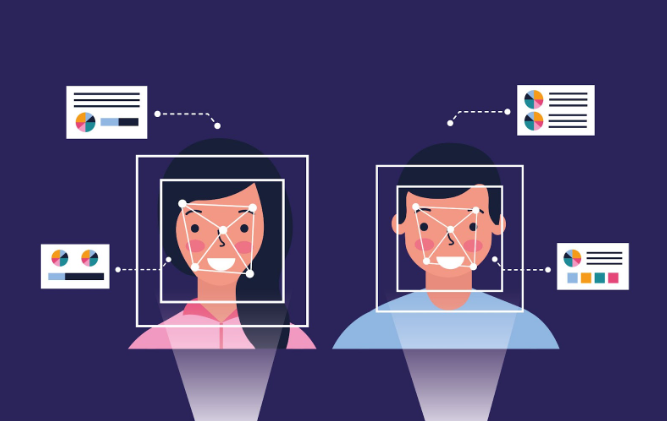
At its core, face swapping relies on deep learning techniques such as convolutional neural networks and generative adversarial networks. These models analyze thousands of data points from a face including:
- Eye position and shape
- Nose alignment
- Jaw structure
- Skin tone and lighting
- Facial expressions
Once the AI detects these landmarks, it maps them onto another face and blends them seamlessly into the original image or video.
Modern tools in 2026 can complete this process in seconds because they are trained on massive datasets. Many platforms also use real-time rendering, allowing users to preview the result instantly.
The improvement in AI processing power has made face swap results significantly more realistic compared to earlier versions from just a few years ago.
Why Has Face Swap Technology Become So Popular?
Face swap technology has grown rapidly because it solves a wide range of creative and professional needs. From entertainment to marketing, AI-powered editing tools allow people to produce content quickly without advanced editing skills.
One of the biggest reasons for its popularity is the rise of short-form video platforms. Social media creators constantly look for unique visuals, and AI tools help them produce engaging content faster.
Several industries are also adopting face swap technology:
- Entertainment and filmmaking use it to recreate actors or adjust scenes without expensive reshoots.
- Marketing agencies use it to personalize advertising visuals.
- Content creators produce humorous videos and memes.
- Education and training simulate realistic scenarios using digital avatars.
Statistics from the digital media industry show that over 60 percent of creators now use AI tools in their editing workflow, highlighting how common these technologies have become.
How Can Beginners Do Face Swap with AI in 2026?
The process of creating a face swap has become simple enough for beginners. Most AI tools automate the complex steps behind the scenes.
The basic workflow usually includes three main stages: uploading images, letting the AI process the faces, and exporting the final result.
First, users upload a source image containing the face they want to replace. Then they upload a target image or video where the new face will appear.
Next, the AI scans both images to identify facial landmarks. Advanced systems analyze dozens of facial points including eyes, eyebrows, mouth edges, and cheekbones.
After detecting these features, the software performs several adjustments:
- Aligns the new face with the original head position
- Matches lighting and shadows
- Adjusts skin tone and texture
- Blends edges to avoid unnatural transitions
Within seconds, the AI produces a realistic composite image.
Many modern tools also allow users to adjust settings such as expression intensity, blending level, and image sharpness to improve realism.
Which AI Tools Help Create Realistic Face Swaps?
There are many AI-powered platforms available in 2026 that simplify the face swap process. These tools typically rely on deep learning models that automate facial detection and blending.
Some services focus on photo editing, while others support video-based face swaps, which require more processing power because they must track facial movement frame by frame.
Many users explore platforms such as Viggle AI because it demonstrates how modern AI animation and motion tools can transform static images into dynamic content. These types of platforms showcase how machine learning models can accurately map facial movements and expressions across different media formats.
When selecting a tool, users usually look for three core capabilities:
- High facial accuracy so the swapped face looks natural
- Fast processing speed for real-time or near-real-time results
- Lighting and color correction that keeps the final image realistic
Recent AI advancements have also improved expression tracking, allowing the swapped face to replicate smiles, eye movement, and subtle emotions more accurately than older methods.
What Steps Help Create a More Realistic Face Swap?
Even though AI tools automate much of the work, a few simple techniques can significantly improve the final result.
One important factor is image quality. High-resolution photos provide more facial data for the AI model, which leads to better blending and sharper results.
Another key factor is similar face angles. If the source face and target face are facing similar directions, the AI can align the facial landmarks more accurately.
Lighting consistency also plays a major role. If one image has bright sunlight and the other has dim indoor lighting, the final result may appear unnatural.
Professional editors often recommend the following practices:
- Use clear images with visible facial features
- Avoid extreme angles or heavy shadows
- Choose faces with similar expressions
- Ensure the lighting conditions are somewhat similar
Many AI tools now automatically correct these issues, but starting with good images still improves results.
Are There Any Ethical or Privacy Concerns with Face Swap?
As AI-generated media becomes more realistic, ethical concerns have also increased. Face swap technology can be used for creative and educational purposes, but it also raises questions about consent and misuse.
One major concern is the creation of misleading content. Because AI-generated visuals can look very realistic, they may sometimes be mistaken for genuine footage.
Governments and technology companies are increasingly working on policies to regulate synthetic media. Some AI platforms now include watermarking systems that identify content generated with AI.
Users should always follow responsible practices when using face swap tools. This includes obtaining permission before using someone’s likeness and avoiding the creation of misleading or harmful media.
According to digital ethics researchers, over 70 percent of AI developers now support transparency labeling for synthetic media, which helps viewers understand when AI has been used.
Conclusion
Face swap technology has evolved rapidly in the past decade. What once required advanced editing skills can now be completed automatically with the help of artificial intelligence. In 2026, AI models are capable of detecting facial structures, matching lighting conditions, and generating highly realistic results within seconds.
The process itself has become simple. Users only need to upload images, allow the AI to analyze facial features, and export the final result. With the right images and careful adjustments, beginners can produce surprisingly professional results.
As AI continues to advance, face swapping will likely become even more accurate and widely used across industries such as entertainment, marketing, and digital content creation. At the same time, responsible use of this technology will remain important to ensure that AI-generated media is used ethically and transparently.
For creators, marketers, and everyday users, understanding how AI face swap works opens the door to new forms of visual storytelling and creative expression.