


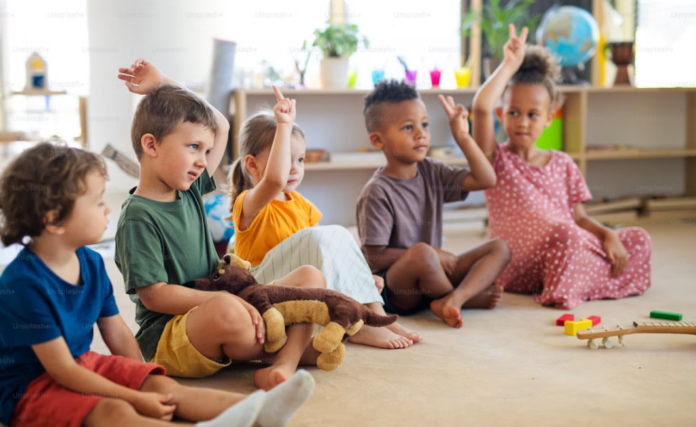
The first five years of a child’s life are widely considered the most critical for their overall development. During this brief window, children absorb information at an astonishing rate, laying the fundamental groundwork for their cognitive, social, and emotional futures. According to the 2024 Australian Early Development Census, 52.9 percent of children nationally are developmentally on track across all five measured domains in their first year of school. While this is a positive statistic, it also highlights the ongoing necessity of quality early learning to boost school readiness for the remaining percentage. Providing a rich, engaging learning environment early on is essential to ensure every child gets the best possible start in life and is prepared for the modern classroom. Modern educational research consistently proves that these formative years dictate a significant portion of a child’s future learning capabilities.
The Science of Play-Based Learning
When parents think about education, they often picture structured classrooms, silent reading time, and formal lesson plans. However, early childhood learning looks quite different and is deeply rooted in developmental psychology. The updated Early Years Learning Framework in Australia explicitly reinforces play-based learning and intentional teaching as essential core practices for all approved providers. This approach is far more than just keeping kids entertained while their parents are at work. It is a highly sophisticated educational strategy designed to foster natural curiosity.
According to a detailed report from Harvard Medical School, child-driven, hands-on play helps build the brain’s prefrontal cortex, leading to better self-regulation and cognitive outcomes. The research notes that children in play-based environments demonstrate greater gains in reading, maths, vocabulary, and social competence than their peers in conventional, structured settings. This means that when children are building block towers, digging in sandpits, or engaging in imaginative role-play, they are actually developing complex problem-solving skills that will serve them for decades. Such environments encourage children to test hypotheses, negotiate rules with peers, and understand the world around them in a highly practical manner.
Finding the Right Environment for School Readiness
Choosing the right setting is a highly personal and significant decision for families. Location, affordability, and community connection play a massive role in finding a supportive space. For example, when researching highly rated childcare centres in Penrith, parents often prioritise facilities that offer strong play-based curriculums alongside dedicated school readiness programs. High-performing providers in the region specifically target outcomes like self-regulation, impulse control, and social confidence to help children transition smoothly into local primary schools. A strong partnership between educators and parents ensures that the child’s individual needs are met every step of the way.
High-quality early learning centres increasingly utilise an emergent curriculum model. In this setup, qualified educators observe children’s natural interests during unstructured play and intentionally use those moments to introduce early numeracy, literacy, and STEM concepts. Educational research underpinning recent government initiatives indicates that participating in 600 hours of quality early childhood education per year (roughly two days a week) in the two years prior to formal schooling is optimal for maximising long-term developmental outcomes. Regional initiatives, like the New South Wales Government’s Start Strong funding, make these specialised preschool programs more accessible for families, ensuring that more children can benefit from professional early education regardless of their socio-economic background.
Key Benefits of Early Childhood Education
The transition into structured educational programs works hand-in-hand with a supportive home environment. Parents looking for broader guidance on this transition can often find valuable resources and actionable advice by exploring dedicated education articles that focus on family dynamics and student success. Connecting a healthy family life with professional early learning creates a seamless support system for the child. Regular communication between parents and educators allows for a consistent approach to behavioural expectations and learning goals.
Enrolling a child in a high-quality program provides a diverse range of lifelong benefits. Beyond simple academic preparation, these settings cultivate a well-rounded individual ready to face the world. Some of the most impactful advantages include:
- Enhanced Social Skills: Children learn to share, cooperate, and resolve conflicts with their peers. This early socialisation is crucial for building foundational emotional intelligence and learning how to work collaboratively in group settings.
- Cognitive Development: Through guided, play-based activities, children naturally encounter mathematical concepts and language skills, improving their vocabulary and critical thinking abilities in a stress-free environment.
- Emotional Resilience: Navigating a new environment away from home helps children build confidence and independence, significantly reducing anxiety when they eventually start formal schooling.
- Routine and Structure: While play is free-flowing, the daily rhythm of a care centre provides a comforting structure that helps children understand expectations and daily transitions, mirroring the schedules they will encounter later in life.
A child’s early years truly set the stage for their future academic and personal achievements. By combining a loving, healthy home environment with a high-quality early education program, parents can give their children the foundational tools they need to thrive. Whether it involves developing empathy through group play, building physical coordination outdoors, or sparking a lifelong love of learning through an emergent curriculum, the profound benefits of early childhood education resonate long into adulthood. Investing in these early stages is ultimately an investment in a brighter, more capable generation.