


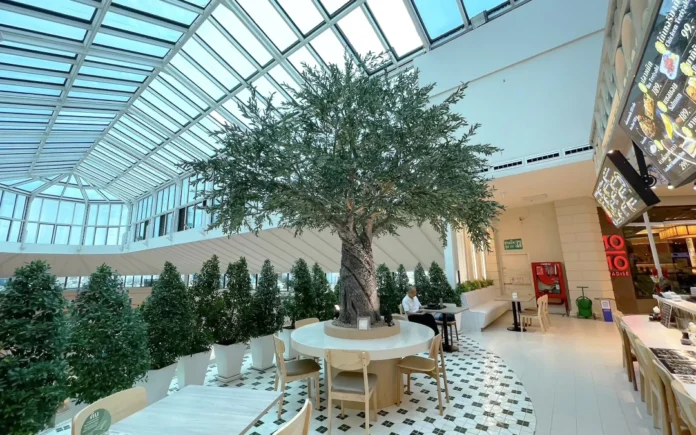
Artificial trees can soften sharp architectural lines by introducing curved branches, irregular foliage and natural-looking shapes that contrast with straight walls, angular furniture and structured interiors. Choosing an artificial tree for home decor (this is commonly referred to as ต้นไม้ปลอม แต่งบ้าน in Thai) allows you to balance these features without changing your home’s architecture. Positioning greenery near prominent corners, large windows or geometric furniture can make a room feel less rigid while preserving its modern character. The secret is creating contrast rather than hiding the architectural details that make your home distinctive.
When Straight Lines Need Something Unexpected
Imagine walking into a living room filled with rectangular furniture, floor-to-ceiling windows and perfectly aligned shelves.
Everything looks beautifully organised, yet the space feels slightly formal.
This happens because architectural elements often repeat similar shapes. Straight edges create order, but too many can make an interior appear visually predictable.
An artificial tree introduces something different.
Its branching silhouette breaks up those repeated lines, giving the eye a softer shape to follow.
You do not need to replace your furniture or introduce elaborate decorations. Sometimes, one well-positioned tree provides enough contrast.
Let Curved Branches Meet Angular Furniture
One effective approach is to place greenery beside furniture with particularly defined edges.
For instance, placing a tall tree with naturally spreading branches beside a rectangular sofa can soften the appearance of a plain wall and create a more welcoming space.
A narrow console table may also benefit from foliage that extends beyond its rigid outline.
Consider these combinations:
- Box-shaped sofas: Pair with trees featuring rounded, spreading canopies.
- Angular shelving: Introduce irregular foliage to interrupt repeated horizontal lines.
- Square dining furniture: Position a slender tree nearby to create a contrasting silhouette.
- Geometric wall panels: Use natural-looking branches to soften the overall composition.
Avoid positioning foliage where it interferes with seating, walkways or everyday activities.
Give Concrete and Glass a Gentler Companion
Contemporary homes frequently feature polished concrete, glass partitions and metal finishes.
These materials create a clean appearance, although their smooth surfaces can sometimes feel visually cold.
Artificial trees offer an interesting contrast through layered leaves and textured trunks.
Beside a concrete wall, greenery can make the surface appear less stark. Near large glass panels, branches introduce organic shapes against the surrounding straight frames.
The result is not necessarily a more traditional interior. Instead, the room gains another layer of visual interest while retaining its contemporary identity.
Create Balance Without Perfect Symmetry
A common decorating instinct is to position identical objects on opposite sides of a room.
However, artificial greenery often looks more natural when arrangements are slightly asymmetrical.
Try placing one substantial tree beside a low cabinet while leaving the opposite side relatively open.
This difference in height creates movement across the room.
Choose a planter that complements the architecture without competing with the tree’s shape. Simple ceramic or textured containers can work particularly well.
A Softer Look Without Losing Your Style
Sharp architectural lines are not something you need to eliminate. They give modern homes structure, clarity and personality.
The purpose of decorative greenery is to introduce contrast that makes those features more comfortable to live with.
If your interior could benefit from softer shapes, explore the large artificial tree collection at Flower Richcy. Consider the available heights, foliage styles and silhouettes to find a decorative tree that complements your architecture and brings a more welcoming atmosphere into your home.