


Key Takeaways
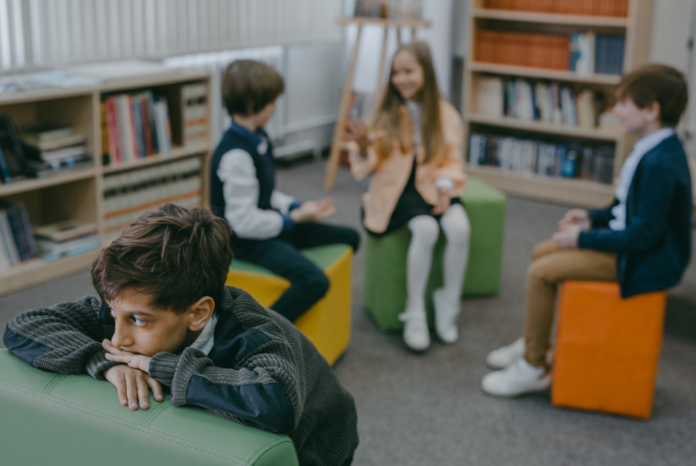
- School stress can show up as physical complaints, irritability, perfectionism, withdrawal, or repeated requests to stay home.
- School avoidance is not necessarily defiance. Anxiety, peer concerns, learning challenges, health issues, and major changes can all contribute.
- For New York City families, calmer routines, small goals, and clear school communication can reduce pressure around attendance.
- Early support matters when worry begins to affect sleep, friendships, attendance, or family life.
Table of Contents
- When School Stress Becomes a Concern
- Why New York City Life Can Add Pressure
- Signs Parents May Notice
- Common Reasons Behind School Avoidance
- A Calm Morning Plan for New York City Families
- Working With Teachers and School Staff
- When to Seek Professional Support
- A Steady Path Forward
For many New York City families, the school day starts long before the first bell. A rushed breakfast, a crowded subway platform, a walk through bad weather, or a noisy school entrance can make an already worried child feel overwhelmed. School-related anxiety can affect children of many ages, and it deserves a curious, compassionate response rather than blame.
Families seeking a child psychologist NYC may consider Pacific Psychology NYC, a practice on Manhattan’s Upper West Side that provides evidence-based therapy, parent support, and psychological services for children, teens, and families. Its clinicians work with concerns such as anxiety, school avoidance, behavioral challenges, and learning issues, giving local New York families a relevant option when school stress starts to interfere with daily routines.
When School Stress Becomes a Concern
It is normal for children to feel nervous before a new grade, a test, a presentation, or a social change. Concern increases when distress lasts for weeks, repeatedly disrupts sleep, affects friendships, changes family routines, or makes regular attendance difficult. A child who says, “I do not like school,” may need reassurance. A child who cries, panics, freezes, or develops physical symptoms each morning may be signaling that school feels unmanageable.
School refusal can have several causes, including separation anxiety, bullying, learning difficulties, medical conditions, and other mental health concerns. It differs from intentional truancy because the child is often distressed about missing school or is unable to make the transition out of the home.
Urgent action is needed if a child reports abuse, threats, self-harm, suicidal thoughts, plans to harm another person, or feels unsafe. In the United States, call 911 for an emergency or contact the 988 Suicide & Crisis Lifeline for immediate mental health support.
Why New York City Life Can Add Pressure
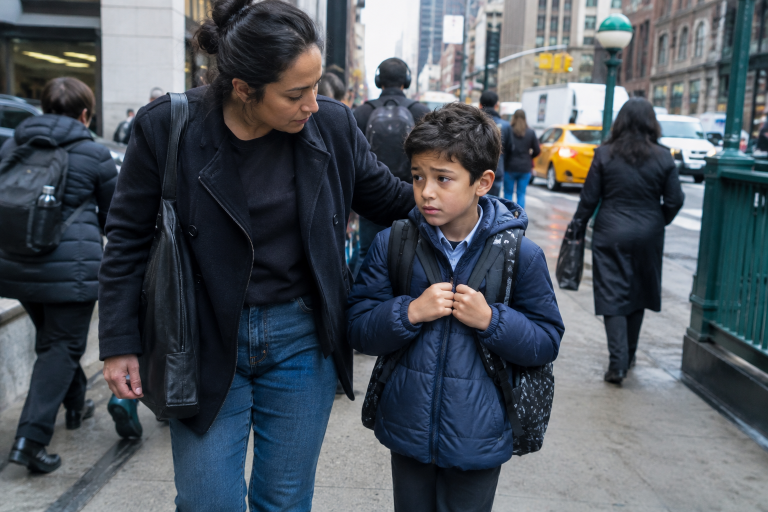
Living in New York City does not cause anxiety, but city routines can create several transitions before a child reaches the classroom. A morning may include getting dressed quickly, leaving a caregiver, navigating a busy sidewalk, riding public transportation, entering a loud hallway, and adjusting to changing after-school plans.
For example, a child may appear calm while eating breakfast in an Upper West Side apartment, then become tearful at the school entrance. That pattern does not automatically mean the child is being difficult. It may mean the hardest moment is the goodbye, the crowded arrival area, or uncertainty about what happens after the door closes. Identifying that exact pressure point helps adults choose a more useful response.
Signs Parents May Notice
Physical Signs
- Stomachaches, headaches, nausea, dizziness, or fatigue before school.
- Poor sleep, nightmares, changes in appetite, or frequent requests to see the school nurse.
- Restlessness, tense muscles, or a sudden need to stay close to a caregiver.
Emotional and Behavioral Signs
- Crying, anger, panic, shutting down, or repeated reassurance-seeking in the morning.
- Fear of mistakes, intense perfectionism, or worry about grades, teachers, classmates, or safety.
- Late arrivals, requests to leave early, avoidance of a particular class, or withdrawal from friends.
Physical symptoms should still be taken seriously. Anxiety and medical conditions can occur at the same time, so parents should not assume that a complaint is emotional without considering appropriate medical care.
Common Reasons Behind School Avoidance
School avoidance often has more than one cause. A child may miss a caregiver while also finding reading difficult. A teenager may fear peer judgment after teasing, feel behind academically, and sleep poorly. Possible contributors include separation anxiety, social anxiety, bullying, learning or attention differences, sensory overload, grief, trauma, obsessive-compulsive symptoms, panic, chronic health concerns, or major family changes.
For one week, keep brief notes about the day, time, setting, physical symptoms, likely trigger, adult response, and what helped. These observations can make conversations with a pediatrician, teacher, counselor, or therapist more specific.
A Calm Morning Plan for New York City Families
- Check health and safety first. Consider illness, bullying, threats, or other immediate concerns.
- Find the hardest moment. Ask whether worry rises at waking, leaving home, commuting, entering school, lunch, gym, or a specific class.
- Prepare the night before. Set out clothing, pack materials, plan breakfast, and confirm transportation.
- Use calm, brief language. Try: “This feels hard. We will focus on the next step together.”
- Choose one reachable goal. It may be getting dressed, reaching the entrance, or checking in with a trusted adult.
- Review without blame. At the end of the day, ask what helped and what could make tomorrow easier.
Compassion and structure can work together. Parents can acknowledge fear while still supporting a gradual return to school. A return plan is most effective when it addresses the reason for avoidance and is coordinated with school staff and, when needed, a clinician.
Working With Teachers and School Staff
Contact the school early, before missed days become an established pattern. Share concrete observations, such as when symptoms begin, whether a particular class is difficult, recent changes at home, and strategies that help. Ask whether grades, participation, friendships, or behavior have changed and whether a trusted adult can greet the child or provide a brief check-in.
Some students may need academic screening, classroom adjustments, a quiet arrival routine, or formal supports. Depending on a student’s needs and evaluation results, a 504 Plan or Individualized Education Program may be appropriate.
When to Seek Professional Support
Consider professional support when anxiety lasts several weeks, attendance declines, physical complaints interfere with daily life, or sleep, mood, appetite, schoolwork, or friendships change sharply. A pediatrician can help assess physical concerns, while a qualified mental health professional can evaluate emotional and behavioral patterns. Signs that a child may benefit from evaluation include distress that persists and interferes with functioning at school, home, or with friends.
A Steady Path Forward
School anxiety is a signal, not a character flaw. A child does not need to feel completely calm before taking the next step. With predictable routines, patient coaching, school collaboration, and timely support, children can build confidence over time. For New York City parents, one calmer morning, one successful school entrance, or one honest conversation can be meaningful progress.