



Navigating the Home Buying and Insurance Process Timeline
The journey to homeownership is a complex one, filled with exciting milestones and critical decisions. Among these, understanding and securing the right homeowners insurance is paramount. It’s not merely a checkbox on a lender’s list; it’s a fundamental layer of protection for our most significant asset. The timing of when we engage with the insurance process can significantly impact our closing, our premiums, and ultimately, our peace of mind.
We often find ourselves juggling inspections, appraisals, and loan applications. Integrating insurance planning into this timeline effectively can prevent last-minute scrambles and costly delays. From the moment an offer is accepted, a strategic approach to insurance becomes essential. This involves understanding how our coverage needs differ from the property’s purchase price, what specific documents lenders require, and how to navigate potential pitfalls.

Understanding the nuances between insuring a home for its purchase price versus its rebuild cost is a common area of confusion. The purchase price includes the land value and is influenced by market dynamics, neither of which are relevant to the cost of rebuilding the physical structure after a disaster. Insuring for the correct amount—the rebuild cost—is crucial to avoid being underinsured.
Coordinating the Home Buying and Insurance Process Before Closing
Our research indicates that the ideal time to begin shopping for homeowners insurance is approximately 30 days before our anticipated closing date. This window allows ample time to gather quotes, compare coverage options, and address any potential underwriting concerns without feeling rushed. Starting early means we can thoroughly research various carriers, ensuring we select a policy that offers comprehensive protection at a competitive rate.
During this phase, it’s also wise to research the property’s insurance history. A crucial tool for this is the Comprehensive Loss Underwriting Exchange (CLUE) report. This report provides a five-year claims history for the property, detailing any past losses filed by previous owners. Understanding this history can give us valuable insights into potential risks, such as recurring water damage or fire incidents, which might influence our premium or even an insurer’s willingness to cover the property. A property with a history of frequent claims could signal higher risk, potentially leading to higher premiums or limited coverage options. Accessing this report, often through our real estate agent or the seller, allows us to assess the property’s insurance risk proactively.
Beyond the CLUE report, a thorough home inspection is invaluable. While not directly an insurance document, its findings can highlight maintenance issues or potential hazards that an insurer might consider. Addressing these proactively, or at least being aware of them, can help us secure better rates and avoid future claim denials. For those seeking to understand market dynamics and property-specific insights that might influence insurance availability and cost, exploring platforms offering data-driven real estate insights can provide a significant advantage in our pre-purchase due diligence.
Lender Requirements and Closing Document Verification
As we approach closing, our mortgage lender will have specific insurance requirements that must be met. These are not merely suggestions but mandatory conditions for loan approval. The primary document required is an insurance binder, which serves as temporary proof of coverage until the full policy is issued. This binder must typically be provided to the lender at least three business days before closing, though some may require it up to a week in advance.
The binder will include a declarations page, outlining key policy details such as the dwelling coverage amount, deductibles, and the policy’s effective dates. Crucially, it must also include a “mortgagee clause,” naming the lender as an interested party. This ensures that in the event of a total loss, the lender’s financial interest in the property is protected.
Lenders also typically require proof that the first year’s premium has been paid in full. This payment is often collected at closing and held in an escrow account, from which future premiums will be paid. Failing to provide these documents on time can lead to significant closing delays, or even the cancellation of our loan.
A critical consequence of not securing homeowners insurance before closing is the risk of “force-placed insurance.” If we fail to provide adequate coverage, our lender has the right to purchase a policy on our behalf. These force-placed policies are notoriously expensive, often costing two to ten times more than a standard policy, and provide minimal coverage, primarily protecting the lender’s interest rather than our own. They are a last resort and a costly mistake we must actively avoid.
Coverage Valuation: Replacement Cost vs. Purchase Price
One of the most common and potentially costly misunderstandings for new homeowners revolves around how much dwelling coverage to purchase. Many mistakenly believe they should insure their home for its purchase price. However, this is a significant error that can lead to either overpaying for insurance or, more dangerously, being severely underinsured.
The purchase price of a home includes the value of the land, which is not insurable, and is heavily influenced by market conditions, location, and amenities. If our home is destroyed, the land remains. What we need to insure is the cost to rebuild the physical structure, not its market value. This is known as the “replacement cost.”

Replacement cost reflects the current cost of materials, labor, and construction permits in our specific area. It can fluctuate due to inflation, supply chain issues, and local building codes. Insuring for the purchase price might mean we’re paying for coverage on an uninsurable asset (the land) or, if the market value is lower than the rebuild cost, we could be left with insufficient funds to reconstruct our home after a disaster. Industry statistics highlight this issue, with studies indicating that as many as 64% of U.S. homeowners lacked sufficient insurance to rebuild their homes, facing an average underinsurance gap of 27%.
Structuring Dwelling Limits and Extended Replacement Endorsements
Our homeowners insurance policy’s “Coverage A – Dwelling” is designed to cover the cost of rebuilding our home. It’s crucial to set this limit correctly. Insurers often require us to insure our home for at least 80% of its estimated replacement cost to avoid a “coinsurance penalty.” If we insure for less than 80% and then file a partial claim, the insurer may only pay a percentage of the loss, leaving us to cover a larger portion out-of-pocket.
To accurately determine our home’s rebuild cost, we should use an insurer’s replacement cost estimator, consult with a local builder, or obtain an independent appraisal. These tools consider factors like square footage, construction materials, architectural style, and local labor rates.
Given the potential for construction costs to rise unexpectedly, especially after widespread disasters, we should consider “Extended Replacement Cost” or “Guaranteed Replacement Cost” endorsements. An Extended Replacement Cost endorsement typically provides an additional 25% to 50% above our Coverage A limit, offering a buffer against unforeseen increases in rebuilding expenses. Guaranteed Replacement Cost goes even further, promising to rebuild our home regardless of the cost, even if it exceeds the policy limit. While these endorsements add to the premium, they provide invaluable protection against the risk of underinsurance due to construction cost inflation.
Essential Endorsements for First-Time Homebuyers
Standard homeowners insurance policies (HO-3) provide broad coverage, but they often have exclusions or limitations that can leave first-time homebuyers vulnerable. To avoid common gaps, we should prioritize specific endorsements that address prevalent risks. Here are four essential endorsements:
- Water Backup and Sump Overflow: Standard policies typically exclude damage from water that backs up through sewers or drains, or overflows from a sump pump. This endorsement covers damage to our home and belongings from these common incidents, which can be particularly devastating.
- Service Line Coverage: This relatively new endorsement covers the cost of repairing or replacing utility lines (water, sewer, power, gas) that run from the street to our home if they break down due leak, tear, rupture, or collapse. Without it, we’re responsible for these often-expensive repairs, which can easily run into thousands of dollars.
- Equipment Breakdown Coverage: This endorsement acts like a mini-warranty for our home’s major appliances and systems, such as HVAC, water heaters, and refrigerators. It covers mechanical or electrical breakdowns not caused by normal wear and tear, extending protection beyond what a standard policy offers. For a home built in, say, 1995, this can be invaluable.
- Ordinance or Law Coverage: If our home is damaged, local building codes may require us to rebuild it to current standards, even if the original structure didn’t meet those codes. This can significantly increase rebuilding costs. This endorsement covers the additional expense of bringing our home up to current building codes after a covered loss. This is especially important for older homes or in areas with stringent building regulations.
These endorsements, often costing less than $150 per year collectively, provide crucial protection against specific risks that standard policies often overlook, offering significant peace of mind for new homeowners.
Policy Types, Optimization, and Multi-Policy Strategies
Navigating insurance involves understanding that not all homes are insured equally, and there are strategic ways to optimize our policies for both coverage and cost. Whether we’re buying a single-family home, a condo, or a townhouse, the type of policy we need will vary, as will the opportunities for savings.
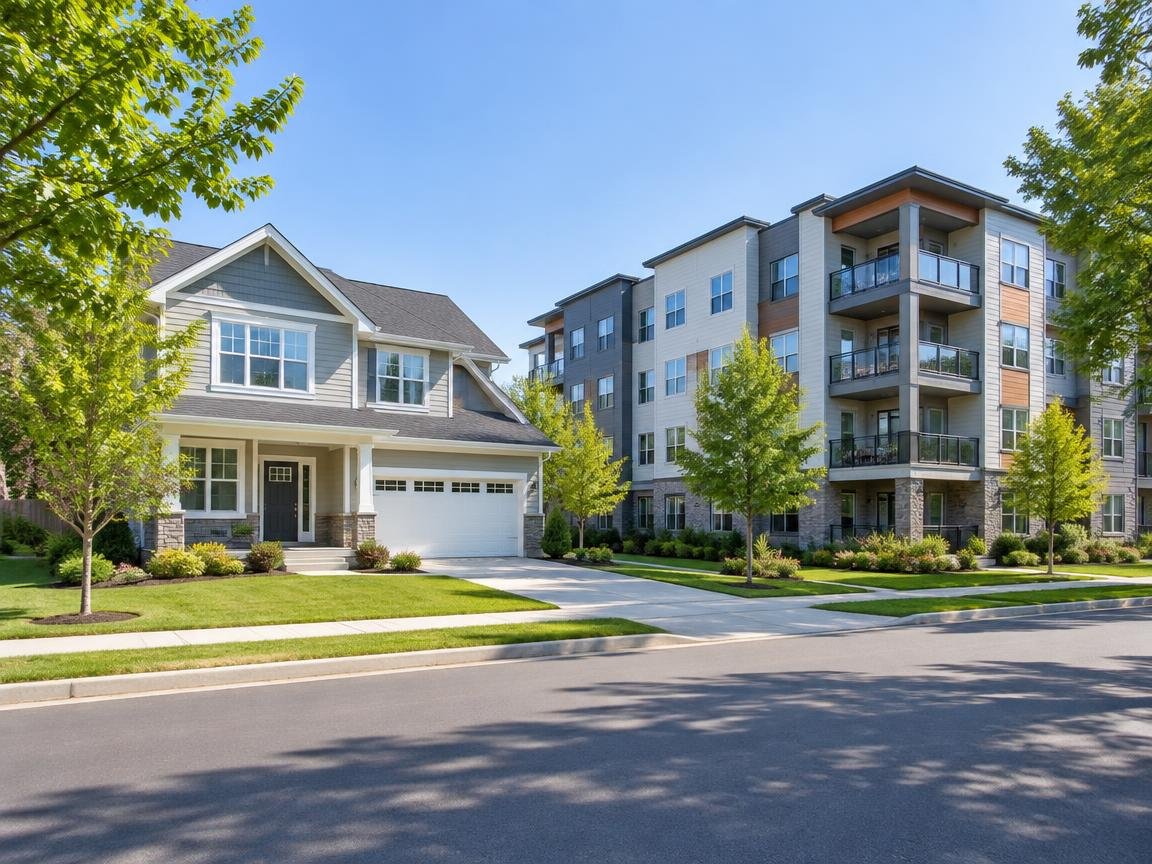
Optimizing our insurance policies goes beyond simply finding the lowest premium. It involves strategically choosing deductibles, leveraging multi-policy discounts, and understanding how our specific property type influences our coverage needs. By taking a holistic approach, we can ensure we have robust protection without overpaying. For those looking for comprehensive solutions that span various personal and commercial needs, exploring providers of personal and commercial insurance coverage can help tailor policies to individual circumstances.
Strategic Deductibles and Multi-Policy Bundling
One of the most effective ways to lower our homeowners insurance premiums is by strategically choosing our deductible. The deductible is the amount we pay out-of-pocket before our insurance coverage kicks in. A higher deductible generally leads to lower monthly or annual premiums. For many first-time homebuyers, a $1,000 deductible is considered a “sweet spot,” balancing manageable out-of-pocket costs with noticeable premium savings. Raising a home insurance deductible to $1,000 can save up to 25% on premiums, according to industry data. However, we should only choose a higher deductible if we have sufficient emergency savings to cover that amount comfortably in case of a claim.
Bundling our home and auto insurance policies with the same carrier is another powerful strategy for significant savings. This “multi-policy discount” can generate 15-25% combined savings across most major carriers. For example, State Farm reports that bundling auto and home insurance can save customers up to $1,429 annually. Other providers, like TD Insurance, highlight average savings of $1,870 per policy term for those bundling home and car. Beyond the financial benefits, bundling often simplifies policy management, allowing us to deal with a single insurer for multiple needs.
We should also explore other potential discounts:
- New Buyer Discounts: Some insurers offer discounts specifically for first-time homebuyers.
- Protective Devices: Installing smoke detectors, burglar alarms, deadbolt locks, or smart home security systems can earn discounts of at least 5%, with more advanced systems potentially yielding 15-20% off premiums.
- Claims-Free Credits: Maintaining a claims-free history can lead to significant savings, with new homeowners who are claims-free potentially saving an average of 25% with some carriers.
- Roof Age/Material: Newer roofs or those made with impact-resistant materials can qualify for discounts.
- Paperless/Autopay: Opting for electronic statements and automatic payments often comes with small but cumulative savings.
By stacking multiple eligible discounts, we can substantially reduce our annual insurance costs, making homeownership more affordable.
Single-Family Homes, Condos, and Townhouse Variations
The type of home we purchase directly dictates the kind of insurance policy we need:
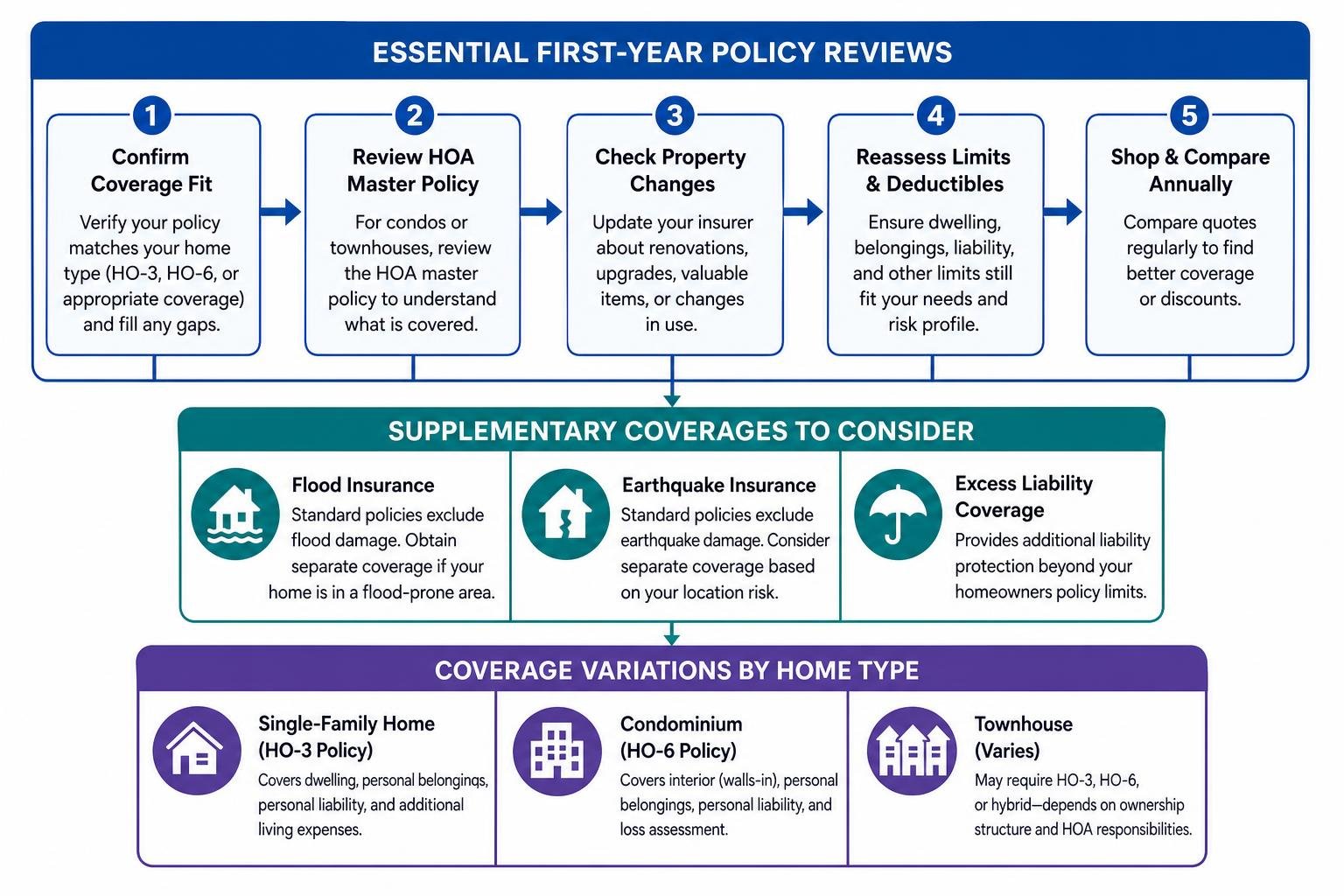
- Single-Family Homes (HO-3 Policy): This is the most common type of homeowners insurance, covering the dwelling structure, personal belongings, personal liability, and additional living expenses if our home becomes uninhabitable after a covered loss. It’s typically an “open perils” policy for the dwelling (meaning it covers everything unless specifically excluded) and “named perils” for personal property (meaning it covers only what’s listed).
- Condominiums (HO-6 Policy): Condo ownership is unique because the condo association typically has a master policy that covers the building’s exterior, common areas, and structural elements. However, this master policy rarely covers everything. We need an HO-6 policy (often called “walls-in” coverage) to protect our individual unit. This policy covers:
- Interior of our unit: From the “studs in,” including fixtures, appliances, flooring, and improvements.
- Personal belongings: Our furniture, electronics, clothing, etc.
- Personal liability: Protection if someone is injured within our unit.
- Loss Assessment: Coverage for our share of a special assessment levied by the HOA for a loss that exceeds the master policy’s limits. It’s crucial to review the HOA’s master policy to understand what it covers (e.g., “bare walls-in” vs. “all-in” coverage) to ensure our HO-6 policy fills any gaps.
- Townhouses: Insurance for townhouses can vary. Some townhouses are owned more like single-family homes, where we own the structure and the land, requiring an HO-3 policy. Others might be part of an HOA that maintains the exterior and common areas, similar to a condo, which might necessitate an HO-6 policy or a hybrid. We must clarify the ownership structure and HOA responsibilities to determine the appropriate policy type.
Understanding these distinctions is vital to securing adequate coverage and avoiding costly surprises down the line.
Post-Closing Protection: Supplemental Coverage and First-Year Milestones
While securing our initial homeowners insurance policy is a critical step, our insurance journey doesn’t end at closing. The first year of homeownership is a period of adjustment and discovery, and it’s also a crucial time to review and potentially expand our insurance protection. Beyond the standard homeowners policy, several supplementary coverages and ongoing reviews are essential for comprehensive asset protection and risk management.
Our total first-year insurance costs can range significantly. For a $300,000–$400,000 home, the 2026 nationwide average for first-time buyer home insurance is $1,400–$2,000/year. However, in catastrophe-exposed areas like coastal Florida, hail-prone Texas, or high-fire California, these costs can surge to $3,500–$6,000+. When factoring in other necessary insurances like private mortgage insurance (PMI), title insurance, and potentially flood or life insurance, the typical homeowner in moderate-risk areas should budget $3,000–$6,000 for total first-year insurance costs, which can exceed $10,000 in high-risk zones.
Flood, Earthquake, and Excess Liability Integration
Standard homeowners insurance policies explicitly exclude damage from floods and earthquakes. Depending on our home’s location, these can be significant risks that require separate policies:
- Flood Insurance: If our home is in a Special Flood Hazard Area (SFHA) as determined by FEMA, our mortgage lender will require flood insurance. This is typically purchased through the National Flood Insurance Program (NFIP) or from a private insurer. NFIP policies usually have a 30-day waiting period before coverage takes effect, so we must plan accordingly. Even if not in a high-risk zone, considering flood insurance is prudent, as over 20% of NFIP claims come from outside SFHAs.
- Earthquake Insurance: For homes in seismically active regions (e.g., California, Oregon, Washington), earthquake insurance is a vital consideration. Standard policies do not cover earth movement. This coverage is typically purchased as an endorsement or a separate policy, often with high deductibles.
- Umbrella Liability Insurance: As our net worth grows with home equity, our liability exposure increases. An umbrella policy provides an additional layer of liability coverage above the limits of our homeowners and auto policies. For instance, if a guest is seriously injured on our property and our homeowners liability limit is exhausted, the umbrella policy kicks in. A $1 million umbrella policy typically costs a modest $150–$400/year, making it one of the best values in personal insurance.
- Life Insurance for Mortgage Protection: Buying a home often means taking on significant debt. We should consider increasing our life insurance coverage to protect our family’s ability to remain in the home if something happens to us. Adding $400,000–$600,000 of 30-year term life insurance for mortgage protection on a healthy 35-year-old typically costs $25–$50/month. This ensures our loved ones aren’t burdened with mortgage payments during an already difficult time.
Avoiding Costly Pitfalls in the Home Buying and Insurance Process
Even after closing, several common mistakes can undermine our insurance protection:
- Lapsed Coverage: Never allow our homeowners insurance to lapse, even for a single day. Lenders will be notified and may force-place expensive insurance. A lapse can also make it harder to find affordable coverage in the future, as insurers view it as a sign of higher risk.
- Inadequate Liability Limits: While $300,000 is a common minimum for personal liability, it may not be enough as our assets grow. We should consider increasing this limit or adding an umbrella policy to protect our equity and future earnings from potential lawsuits.
- Not Having an Emergency Fund: A higher deductible can save us money on premiums, but only if we have an emergency fund to cover that deductible in case of a claim. Without it, a covered loss could still create significant financial strain.
- Failing to Document Home Inventory: After moving in, we should create a detailed home inventory of our personal belongings, including photos, videos, and receipts. This documentation is invaluable for filing a claim and ensuring we receive fair compensation for lost or damaged items.
- Neglecting Annual Policy Review: Our insurance needs change over time. We should review our policy annually with our agent to adjust coverage limits, update endorsements, and explore new discounts. Major renovations, new purchases, or changes in local building codes can all impact our optimal coverage.
By proactively managing these aspects, we can ensure our home and our financial future remain well-protected throughout our homeownership journey.
Frequently Asked Questions About Home Buying and Insurance
We understand that the home buying and insurance process can raise many questions. Here, we address some of the most common inquiries first-time homebuyers have.
When should a home buyer start shopping for homeowners insurance during the transaction?
We recommend starting to shop for homeowners insurance approximately 30 days before our anticipated closing date. This timeline aligns well with the appraisal and underwriting schedule, allowing us to gather multiple quotes, compare coverage options, and select a policy without pressure. It also provides a buffer to address any potential issues, such as a property’s claims history or specific regional risks, ensuring our policy is bound and proof of insurance is provided to the lender well in advance of closing.
What happens if homeowners insurance is not secured before the scheduled closing date?
Failing to secure homeowners insurance before the scheduled closing date can lead to serious consequences. The most immediate impact is a delayed closing, as lenders will not fund a mortgage without proof of an active policy. In some cases, the lender may even reject the loan application if the insurance requirement isn’t met in time. If we still haven’t secured a policy, the lender might resort to force-placed coverage, which is significantly more expensive (often 2 to 10 times the cost of a standard policy) and offers minimal protection, primarily safeguarding the lender’s interest. This could put us at risk of loan default if we cannot meet the lender’s terms.
How does a CLUE report impact property insurability and premium rates?
A CLUE (Comprehensive Loss Underwriting Exchange) report provides a five-year history of property insurance claims associated with a specific address. Insurers use this report as a key underwriting tool to assess the property’s risk profile. A history of frequent or severe claims, especially water-related claims, can significantly impact our insurability and premium rates. For example, a property with multiple prior water damage claims might be deemed higher risk, leading to higher premiums, specific exclusions, or even a denial of coverage from some insurers. Understanding the CLUE report before finalizing our purchase allows us to anticipate potential insurance challenges and negotiate accordingly.
Conclusion
The journey of buying a home is an exciting chapter, representing a significant personal and financial commitment. As we’ve explored, integrating the insurance process seamlessly into this journey is not just a regulatory requirement but a fundamental strategy for long-term protection and peace of mind. From understanding the critical timing of policy acquisition to discerning the nuances between replacement cost and purchase price, every decision contributes to the security of our investment.
By proactively addressing lender requirements, exploring essential endorsements, and strategically optimizing our policies through bundling and deductible choices, we can navigate the complexities with confidence. Furthermore, considering supplementary coverages like flood, earthquake, and umbrella insurance, along with maintaining vigilance through annual reviews and meticulous documentation, ensures our protection evolves with our homeownership experience.
Successful homeownership is about more than just acquiring a property; it’s about safeguarding that asset and our financial well-being against unforeseen challenges. By arming ourselves with knowledge and making informed insurance decisions, we lay a solid foundation for a secure and enjoyable future in our new home.