


Key Takeaways
- Tamper-resistant fasteners can discourage casual vandalism and unauthorized access, but they work best as one layer of a broader security plan.
- The right hardware depends on the asset, public access, service requirements, substrate, environmental exposure, and likely threat.
- Removable security fasteners are usually better for equipment that requires inspection, while permanent designs are better for fixtures that should not be routinely opened.
- Fastener size, thread engagement, material compatibility, installation torque, and tool control are as important as the drive style.
- Project teams should document the approved tools, replacement hardware, and inspection process before installation.
Public infrastructure has many exposed fastening points, including signs and benches, lighting assemblies, transit equipment, utility cabinets, charging stations, and outdoor enclosures. Choosing hardware from a specialist such as https://bestsecurityscrews.com/ can help project teams match the fastening method to the security and maintenance needs of each installation.
A standard screw may be easy for an authorized technician to remove. Still, that convenience also applies to someone attempting to loosen a panel, steal a fixture, or access equipment without permission. Tamper-resistant hardware is intended to add time, effort, and visibility to unauthorized removal. It should not be treated as an impossible-to-defeat barrier.
Why Fastener Choice Matters In Public Spaces
Fasteners are often a small detail with an outsized effect on reliability. A loose access panel on a public fixture can lead to repeated maintenance calls, expose wiring or internal components, and leave the site looking neglected. Selecting the right fastener at the start can reduce avoidable rework while making authorized servicing more predictable.
Different drive patterns offer different levels of access control. A range of screw drive designs includes ordinary patterns as well as one-way, pin-based, spanner, security hex, and other specialized options. The best choice is not simply the most unusual-looking head. It is the design that fits the risk, installation conditions, and future service plan.
What Makes A Fastener Tamper-Resistant?
Standard fasteners use common drives that many people can turn with readily available tools. Tamper-resistant fasteners use a less common drive, a center pin, a one-way head, or another feature that requires a matching tool. Controlled-access fasteners can be removed by authorized staff with the correct driver. Permanent fasteners, including certain breakaway or one-way styles, are intended for applications where normal removal is not expected.
Even a specialized fastener has limits. It cannot compensate for a weak enclosure, an exposed backside nut, an accessible hinge, poor lighting, or a missing inspection routine. For high-value or safety-critical assets, use the fastener as part of a complete approach that considers enclosure design, access control, monitoring, and maintenance.
Match The Fastener To The Risk
Low-Risk Locations
For fixtures where the goal is to discourage casual removal, a removable security drive may be enough. Examples can include informational signs, low-value covers, and public-facing trim. Keep the tool requirement practical so maintenance staff can complete routine work without delay.
Moderate-Risk Locations
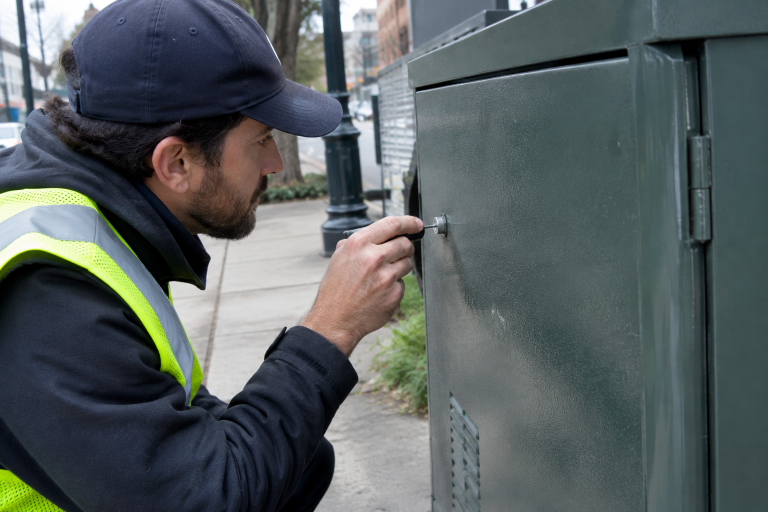
Use more controlled hardware when unauthorized access could cause equipment damage, service interruptions, or recurring repair costs. Outdoor control boxes, lighting components, and transit fixtures may benefit from security drives paired with corrosion-resistant materials and protected rear connections.
High-Risk Locations
Assets connected to utilities, communications, transportation, or public safety require a more complete review. Consider the enclosure, hinges, locks, mounting points, and servicing procedures along with the fastener. The selected hardware should support authorized access without creating a weak point elsewhere in the assembly.
Permanent Applications
One-way and breakaway designs can suit signs, fixed plaques, or components that should only be removed during replacement or major repair. Do not specify permanent hardware for an assembly that technicians must inspect monthly, because normal service may then require drilling, cutting, or damaging adjacent parts.
Review The Installation Site First
Before placing an order, identify who can reach the hardware and what could happen if it is opened, loosened, or removed. Confirm how often authorized personnel need access, whether emergency entry is necessary, and whether the fastener is installed in steel, aluminum, wood, masonry, plastic, or composite material.
- Check for rain, snow, salt spray, dust, chemicals, cleaning products, vibration, and temperature changes.
- Consider whether a loose fastener could create a falling-object, trip, electrical, or hygiene concern.
- Review accessible front and rear connections, including nuts, anchors, hinges, and mounting brackets.
- Confirm applicable project specifications, agency requirements, and local code obligations.
Choose The Right Material And Finish
Removal resistance is only useful if the hardware remains serviceable in its environment. Stainless steel is commonly chosen where corrosion resistance is important. Coated or galvanized steel may be appropriate for some applications, depending on the coating, exposure, and project requirements. Match the washer, enclosure, supporting structure, and fastener materials as carefully as possible.
When dissimilar metals remain in contact in wet conditions, galvanic corrosion can become a concern. Salt air, road spray, pool environments, and aggressive cleaning chemicals can also change the material selection. Review compatibility before installation rather than waiting for staining, seized threads, or weakened hardware to appear.
Installation Details That Affect Performance
Correct installation is essential. Confirm the diameter, length, thread type, and head style for the assembly. Use enough thread engagement to secure the connection, but avoid leaving an exposed length that can be gripped or leveraged. Seat the head fully and keep it aligned with the surface, since a proud or tilted head can create an easier point for removal.
Use the matching driver in good condition and follow applicable torque guidance for the fastener and substrate. Over-tightening can damage threads, panels, and drive recesses. Research on tamper-resistant fastener designs also illustrates the broader principle that specialized hardware can delay unauthorized access while supporting broader physical protection measures.
Common Mistakes To Avoid
- Choosing a drive only because it appears uncommon.
- Using hardware that is too short, too long, or incompatible with the mounting material.
- Leaving a nut, anchor, hinge, or backside connection exposed.
- Installing permanent hardware where frequent service is required.
- Mixing multiple drive types without documenting the required tools.
- Ignoring corrosion, vibration, and chemical exposure.
- Assuming fasteners alone can stop determined theft or forced entry.
A Simple Selection Checklist For Project Teams
- Identify the asset and its safety, service, or replacement value.
- List likely threats, including casual tampering, vandalism, theft, and unauthorized entry.
- Measure the materials and confirm the required size, thread, and head style.
- Review environmental exposure and material compatibility.
- Choose removable or permanent hardware based on maintenance needs.
- Order matching installation and removal tools, then control access to them.
- Document replacement parts and set an inspection schedule.
Conclusion
Tamper-resistant fasteners are most effective when they support the full installation plan. Select hardware that slows unauthorized access, withstands local conditions, and still lets approved workers perform repairs safely. By reviewing risk, service frequency, materials, installation details, and tool control before work begins, public infrastructure teams can reduce avoidable maintenance problems and eliminate common weak points.