



Key Takeaways
- Keep recall notices, repair orders, invoices, and vehicle communications organized in one place.
- Use the VIN to check for open safety recalls through the official recall lookup tool.
- Understand the difference between recalls, warranty repairs, technical service bulletins, and customer complaints.
- Record symptoms, mileage, diagnoses, repairs, parts used, and vehicle downtime after every service visit.
- Photos, videos, diagnostic codes, and written communications can help document recurring problems.
- Look for patterns when the same warning, symptom, or system problem returns after a repair.
- Stop driving and consider towing the vehicle when serious safety concerns such as brake failure, smoke, fuel leaks, or loss of steering occur.
- Keep written records of repair delays, parts availability, warranty issues, and communication with the repair facility or manufacturer.
- Recheck recall information periodically, especially after buying a used vehicle or before long trips.
- Complete records can help owners make informed decisions when vehicle problems continue.
Vehicle trouble is easier to manage when every symptom, repair visit, and safety notice is documented in one place. Whether you drive a newer daily commuter, an older truck, or a vehicle with known Chevy Avalanche problems, organized records can help you recognize when an issue is becoming more serious, rather than treating each repair as an unrelated event. A simple folder on your phone, a paper file, or a basic spreadsheet can make a major difference. It gives you a clearer history for repair professionals, helps you follow up on open recalls, and preserves details that are easy to forget after several weeks or multiple trips to the shop.
Why Recall And Repair Records Matter
A safety recall is different from a warranty repair, a technical service bulletin, or a customer complaint. A recall addresses a safety-related defect or a failure to meet a federal safety standard. A warranty repair addresses a covered vehicle problem, while a technical service bulletin usually gives technicians diagnostic or repair guidance. A complaint is an owner report and does not, by itself, establish that a recall exists. These distinctions matter because one invoice rarely tells the full story. A warning light may return, a symptom may occur only in certain weather or traffic conditions, or several repairs may point to a broader problem with a single system. In 2025, NHTSA reported 997 safety recalls affecting more than 29 million vehicles in the United States, which is a useful reminder to check for safety campaigns even when a vehicle appears to be operating normally.
How To Check For Open Recalls
Start with the vehicle identification number, commonly called the VIN. It is usually visible through the lower corner of the windshield on the driver’s side, and it may also appear on the driver-side door label, registration, or insurance documents. Use the VIN rather than relying only on the year, make, and model, because recall eligibility can depend on production details and equipment.
- Find the complete 17-character VIN.
- Use the official recall lookup tool to search for unrepaired safety recalls.
- Compare the results with mailed notices, emails, and dealer messages.
- Call an authorized dealership to confirm that the remedy and needed parts are available.
- Save a screenshot, printout, or dated note of the result.
A VIN search may not display recalls that have already been repaired, and newly announced recalls may take time to identify all affected VINs. Rechecking periodically, particularly before a long trip or after buying a used vehicle, is a practical habit.
How To Read A Recall Notice
Recall notices can be technical, but owners should focus on five basic details. First, identify the defect and the vehicle system involved. Next, read the safety risk carefully to determine whether the problem could involve a crash, fire, injury, or loss of control. Then review the remedy, which may involve an inspection, a replacement part, a repair, or a software update. Also, look for the repair status and any driving instructions. Some notices advise owners to park outdoors, avoid charging, limit use, or stop driving until the vehicle is repaired. Follow those directions even if the vehicle has not shown symptoms. A serious defect may not produce an obvious warning before it creates a dangerous situation.
How To Build A Complete Repair File
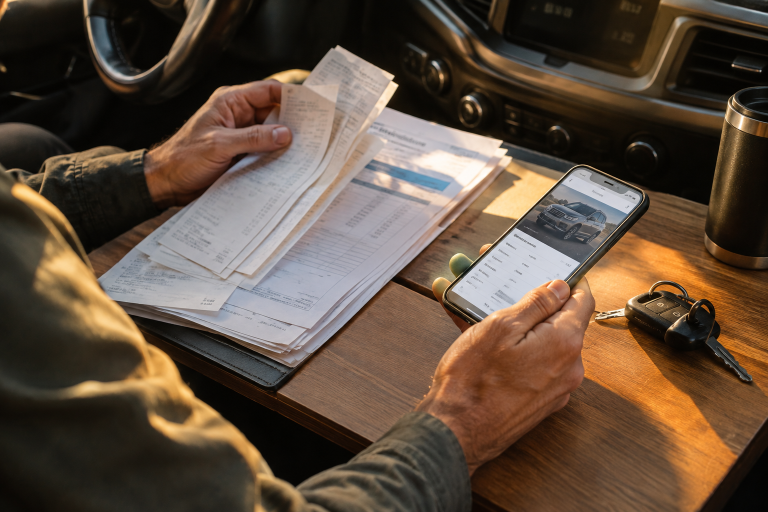
A useful repair file does not need to be complicated. Keep every repair order, invoice, towing receipt, and recall completion record. For each visit, record the date, mileage, shop location, stated symptom, diagnosis, repair performed, parts used, and outcome.
- Write down symptoms in specific terms, such as when they occur and how long they last.
- Take photos or short videos of warning lights, leaks, dashboard messages, or visible damage when it is safe to do so.
- Ask for diagnostic trouble codes and test results when they are available.
- Note the name of the employee who accepted the vehicle and any advice provided.
- Track days without the vehicle, rental expenses, towing costs, and missed work.
A spreadsheet is especially helpful when the vehicle has returned to the shop more than once. Separate columns for mileage, complaint, repair, downtime, and result make patterns easier to see.
How To Spot A Repeat Vehicle Problem
Repeat problems are not always described with identical language. “Rough running,” “hesitation,” and “loss of power” may describe related symptoms. Compare the timing, driving conditions, warning lights, and affected system, rather than looking only for the same wording on every repair order. Pay close attention when the same warning light returns, the same component is replaced again, the shop says it could not duplicate the concern, or the vehicle needs another visit soon after pickup. A recurring problem that occurs under the same conditions, such as highway driving, rain, hard braking, or hot weather, deserves clear documentation.
When To Stop Driving The Vehicle
Some issues call for caution rather than another test drive. Pull over safely and consider a tow if there is a major loss of braking or steering response, smoke, a burning smell, visible flames, a fuel leak, rapid fluid loss, repeated stalling in traffic, or unusual wheel, suspension, or axle movement. Do not ignore a recall notice that says “do not drive.” Avoid trying to recreate a serious symptom on public roads. The cost and inconvenience of towing can be far lower than the consequences of a crash, fire, or additional damage.
What To Do When A Repair Is Delayed
Ask the repair facility for a written explanation of the delay. Find out whether the issue involves diagnosis, scheduling, parts availability, warranty approval, or another factor. Request an estimated completion date and ask directly whether the vehicle is considered safe to drive while you wait. Save appointment confirmations, emails, text messages, and notes from phone calls. If a safety concern remains unresolved, contact the manufacturer’s customer assistance department. Owners can also report suspected safety problems, while manufacturers are required to submit defect and noncompliance information when a safety recall is initiated.
Common Record-Keeping Mistakes
- Waiting until a major breakdown to collect paperwork.
- Keeping payment receipts but discarding detailed repair orders.
- Using vague descriptions instead of noting specific symptoms and conditions.
- Failing to record mileage at each visit.
- Deleting messages after a repair appears complete.
- Assuming a completed recall repair resolves every related concern.
- Relying on a general web search instead of checking the VIN
Common Questions From Vehicle Owners
How Often Should A Vehicle Be Checked For Recalls?
Check when purchasing a used vehicle, before longer travel, after receiving a notice, and during routine service. Checking twice a year is also a reasonable way to catch newly announced or updated recalls.
Does A Recall Mean The Vehicle Is Unsafe To Drive?
Not always. The correct response depends on the defect and the instructions in the notice. Read the driving guidance instead of assuming every recall carries the same level of urgency.
What If The VIN Search Shows No Open Recall?
It means no unrepaired recall is shown for that VIN at the time of the search. It does not rule out ordinary mechanical problems, intermittent failures, or concerns that have not become the subject of a recall.
Final Takeaway
Tracking recalls and repairs is a practical part of vehicle ownership, not unnecessary paperwork. A current VIN check, complete repair orders, clear symptom notes, and saved communication can help you identify repeat issues, respond to safety notices, and make better decisions when a problem does not go away. Keep records of when the issue first appeared, what conditions caused it, and what repairs or inspections were performed. It is also helpful to save invoices, diagnostic reports, photographs, warranty documents, and messages with the dealer, repair shop, or manufacturer. Organized records make it easier to understand the vehicle’s history and avoid relying on memory when the same concern returns. Taking a few minutes to maintain this information can provide a clearer picture of ongoing problems and support more informed decisions about future repairs, inspections, warranty coverage, or other available options.
