


Whether a court is built for a school playground, a community recreation center or a professional training facility, the surface beneath the players shapes almost every part of the experience. It affects how the ball bounces, how well athletes can grip and pivot, and how much stress their joints absorb over time. It also decides how much maintenance the facility will need for years after construction ends.
This article explains the main types of sport court surfaces, the factors to weigh before choosing one, and the installation practices that help a court perform well for a long time.
Why Sport Court Surface Selection Matters
A court surface is a long term investment, and the decision should be made early in the planning stage. Schools, municipalities and private developers all benefit from working with experienced sports flooring manufacturers, because these companies understand how materials behave under different loads, climates and usage patterns. A reliable manufacturer can recommend a system suited to the sport being played, the age of the users and the local weather, instead of offering a single product for every situation.
Poor surface choices tend to show up quickly. Cracking, uneven wear, standing water and excessive hardness can all lead to higher repair costs and, more seriously, a greater risk of injury. A well chosen surface supports consistent play, protects athletes and keeps the facility available for more hours of the year. For school sports programs in particular, safety and durability are often the deciding factors, since courts are shared by students of many ages and skill levels.
Common Types of Sport Court Surfaces
Several surface categories dominate the market, and each has its own strengths. Asphalt and concrete are the traditional base layers for outdoor courts. They are affordable and sturdy, but they are also hard on the body and usually need a protective coating to improve playability.
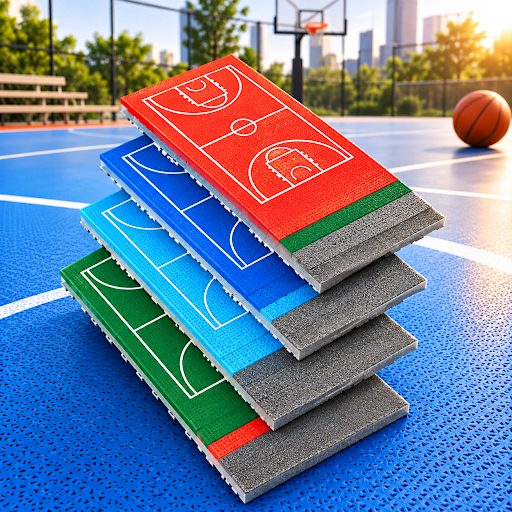
Acrylic coatings are widely used on basketball, tennis and multipurpose courts. They provide a consistent, paintable finish with good grip, and the color range makes it easy to mark lines for several sports on one court. Modular interlocking tiles, usually made from polypropylene, offer a quick installation and good drainage, which makes them popular for outdoor basketball and recreational areas. Synthetic turf serves football, hockey and multipurpose fields, while polyurethane and rubber systems are common in running tracks and indoor halls. The right choice depends on the sport, the budget and the level of cushioning required.
Key Performance Factors to Evaluate
Before committing to a surface, decision makers should compare a few core performance factors. Shock absorption comes first, because it determines how much impact is transferred to the knees, ankles and lower back. Surfaces that cushion landings reduce fatigue and lower the risk of overuse injuries, which matters for students and recreational players.
Traction is the second factor. A surface that is too slippery increases the chance of falls, while one that is too grippy can strain joints during quick direction changes. Ball response should also be consistent, since uneven bounce makes training less effective. Weather resistance is essential outdoors, where ultraviolet exposure, rain, heat and freezing temperatures all wear on materials. Finally, drainage and surface stability affect how quickly a court can be used after rain, which has a direct effect on scheduling for schools and clubs.
Rubber Based Options for Outdoor and School Use
Rubber surfaces have become a leading choice for playgrounds, running tracks, multipurpose courts and fitness areas. Among them, EPDM rubber flooring stands out for its resilience and weather tolerance. EPDM granules are bonded with polyurethane to create a seamless, colorful layer that remains flexible in cold weather and resists fading under strong sunlight. The material also provides reliable cushioning, which is why it is so often specified for school sports areas and children’s play zones.
Its permeable structure allows water to drain through, which helps reduce puddling and keeps the surface usable after rainfall. EPDM can be installed over a prepared asphalt or concrete base, and it can be customized with different colors, line markings and logos. Because it is slip resistant and soft underfoot, it supports both safety and comfort for a wide range of ages. For construction teams, it offers predictable results when the base preparation and mixing ratios are handled correctly.
Installation and Maintenance Considerations
Even the best material will underperform if the base beneath it is poorly prepared. A stable, well compacted and properly graded foundation is the starting point for any sport court. The base must be level enough to avoid ponding yet sloped slightly to guide water away from the playing area. Moisture, temperature and curing time at the time of installation also influence how well coatings and adhesives bond.
Routine maintenance keeps a surface safe and attractive. Regular sweeping removes debris that can cause slips or abrade the top layer, and periodic washing with mild cleaners helps prevent algae and stains. Small cracks, loose seams or worn line markings should be repaired promptly, before they spread into larger problems. A simple inspection schedule, carried out each season, can extend the service life of a court considerably and protect the original investment.
Conclusion
Selecting the right sport court surface requires balancing safety, performance, durability and budget. By understanding the main surface types, comparing shock absorption, traction and weather resistance, and planning installation and maintenance carefully, schools, builders and facility owners can create courts that serve communities for many years. Good planning at the start prevents costly repairs later and gives athletes of all ages a safer place to play.