



Key Takeaways
- A useful top rotation provides variety without requiring an overcrowded closet.
- Start with reliable base layers, then add shirts, warm mid-layers, and outerwear as needed.
- Fit, fabric weight, color coordination, and care needs matter more than short-lived trends.
- Each new top should work with several pants, shoes, and layers already in the wardrobe.
- Basic care and prompt repairs can help favorite pieces stay wearable for longer.
A dependable casual wardrobe begins with tops that suit real routines, not just a single occasion. Whether you are comparing T-shirts, overshirts, hoodies, sweaters, or lightweight jackets, browsing best fall tops for men can be a useful starting point for identifying the layers that fit your climate and personal style.
Why a Top Rotation Works Better Than a Crowded Closet
Owning many tops does not automatically make getting dressed easier. A rotation is a smaller group of pieces chosen to work together across everyday settings, such as a casual workplace, weekend plans, travel, and relaxed dinners. The idea is similar to a capsule wardrobe, which focuses on coordinating garments that can create several outfits without excessive duplication.
The goal is not to limit personal expression. It is to reduce the number of items that sit unworn because they are uncomfortable, difficult to pair, too seasonal, or suited to an imaginary lifestyle. When most tops work with what you already own, morning decisions become more straightforward.
Start With Real-Life Needs
Before shopping, take stock of the week you actually have. Someone who works from home may rely on comfortable knits and T-shirts, while a commuter may need button-front shirts and removable layers. A traveler may value quick-drying fabrics and packable jackets, while someone who spends time outdoors may prioritize warmth and weather protection.
- List the settings that make up a typical week.
- Consider local weather and indoor temperature changes.
- Identify the tops you already wear repeatedly.
- Set a realistic budget before browsing.
- Look for gaps instead of buying near-duplicates.
The Four-Part Top System
1. Base Layers
Base layers include plain T-shirts, long-sleeve tees, henleys, and other lightweight pieces worn on their own or beneath another layer. Neutral shades such as white, gray, navy, black, olive, and tan make it easier to pair these basics with denim, chinos, and casual trousers.
2. Casual Shirts
Button-front shirts add structure when a T-shirt feels too informal. Oxford-style shirts, casual poplin shirts, flannels, and short-sleeve button-ups can all serve this role. Keep most patterns modest, then use one or two bolder options as accents rather than making every top compete for attention.
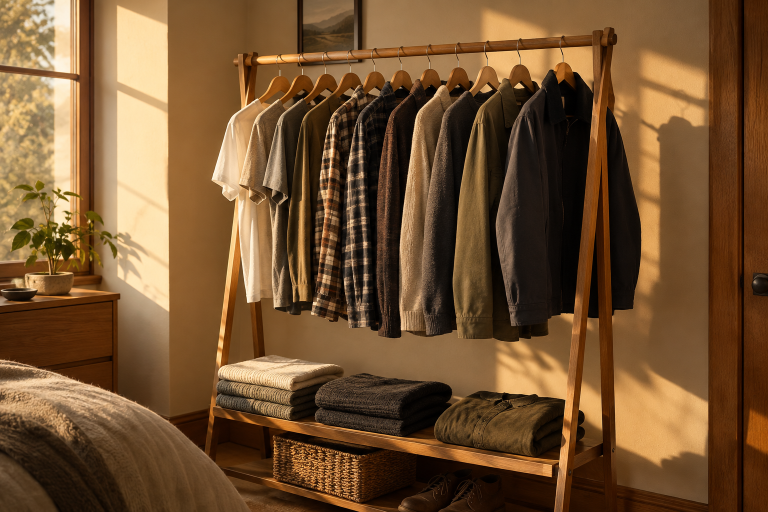
3. Mid-Layers
Hoodies, crewneck sweatshirts, sweaters, quarter-zips, fleeces, and overshirts provide warmth and texture. They are especially useful when temperatures change throughout the day because they can be added or removed without having to rebuild the entire outfit.
4. Outer Layers
Light jackets, insulated jackets, and packable shells complete the system. A neutral outer layer is often the most flexible choice because it can pair with a wide range of colors and outfits without requiring matching pieces.
How Many Tops Do You Really Need?
There is no universal number. Laundry access, climate, work requirements, and how often you change clothes all matter. As a flexible starting point, many people can build a practical rotation with the following range:
- Five to seven everyday base layers.
- Two to four casual button-front shirts.
- Two to three warm mid-layers.
- One or two lightweight jackets.
- One dependable cold-weather layer when the local climate calls for it.
Choose Fabrics by Use, Not Hype
Fabric should match the job the garment needs to do. Cotton is a familiar choice for everyday shirts and tees. Wool can add warmth in cooler conditions, while fleece is common in casual insulating layers. Linen blends can feel lighter in warm weather, and synthetic blends can be useful when quick drying, travel, or active use is a priority.
Weight matters as much as fiber content. A thin sweater may be comfortable indoors but insufficient for a cold walk, while a heavy fleece may be too warm for a heated office. Always check the care label before buying, especially for knitwear or fabrics that require special care.
Use Color and Fit to Make Outfits Easier
Choose two or three core neutrals, then add one or two accent colors that suit them. For example, gray, navy, olive, and tan can create many combinations with dark denim and khaki chinos. A gray sweatshirt with jeans, an olive overshirt with tan pants, or a navy sweater with lighter trousers are simple formulas that rarely require much thought.
Fit also determines whether layering feels comfortable. Base layers should sit smoothly through the chest and shoulders. Mid-layers need enough room for a shirt underneath, and jackets should allow normal movement through the arms. Before keeping a piece, raise both arms, sit down, move your shoulders, and try it over the layer you would normally wear beneath it.
Build Repeatable Outfit Formulas
- Warm day: T-shirt, casual trousers, and simple sneakers.
- Cool morning: T-shirt, overshirt, jeans, and low-profile shoes.
- Casual office: Button-front shirt, lightweight sweater, chinos, and clean sneakers.
- Weekend outdoors: Long-sleeve base layer, fleece, durable pants, and weather-ready footwear.
- Travel day: Breathable base layer, removable mid-layer, lightweight jacket, and comfortable trousers.
Adapt the Rotation to Each Season
Spring calls for light layers that work across cool mornings and warmer afternoons. Summer favors breathable fabrics, lighter colors, and one long-sleeve option for cool evenings or air-conditioned spaces. Fall is well suited to flannel, textured knits, fleece, and light jackets. In winter, focus on warm layers that fit comfortably under outerwear and can be removed once indoors.
Shop and Care With Intention
Before buying a top, ask whether it fills a real gap, pairs well with at least 3 existing outfits, layers comfortably, suits the intended season, and fits your care routine. Avoid buying an item solely because it is trending if it does not solve a practical wardrobe need.
Care supports the same thoughtful approach. Wash according to the label, avoid unnecessary high heat, fold knits when hanging may stretch them, and repair loose buttons or small holes early. The EPA encourages people to maintain and repair things they already own so they do not need to be replaced as often.
Conclusion
A strong men’s casual top rotation is built around usefulness, comfort, and coordination. With dependable base layers, a few adaptable shirts, warm mid-layers, and practical outerwear, it becomes easier to create outfits for changing weather and everyday plans. Buy to fill clear gaps, choose fabrics and fits that suit your routine, and take care of the pieces that already work.