



Key Takeaways
- Plan music for the entire wedding day, not only the open dance floor.
- Give every phase its own purpose, mood, and appropriate volume.
- Use music to make transitions feel intentional rather than abrupt.
- Share must-play songs and preferences, then allow performers to respond to the room.
- Build the timeline around venue limits, meal service, photography, and guest movement.
An appropriate wedding music timeline does much more than fill silence in moments. It directs guests to activities they need to take part in and lets them know when to get excited and when to be quiet. Whether you engage a live wedding band or a DJ, an ensemble for your ceremony or a mixture of performers, the intention is always the same: create a soundtrack for the big day, starting from the arrival of guests to the end of the wedding.
The key is a good combination of planning and some flexibility. You can select songs you find important, determine the crucial moments during your wedding ceremony, and still account for a delayed meal, an emotional speech, or a dance that lasts for longer than planned.
Why a Music Timeline Makes the Day Feel Smooth
Though having just a playlist cannot determine at which moment a certain song will play, who announces it, the length of each moment, and what happens in case of change of plans. A music timeline addresses these issues.
Do not think of it as a factor that will spoil the mood of the wedding ceremony. Instead, it helps to coordinate all people involved in the event, so the guests can enjoy their wedding day without a single unnecessary pause.
Start With the Venue’s Fixed Times
Make a list of the essential things that cannot be changed and arrange them in the right order: the time of the arrival of guests, the time of the ceremony and the cocktail hour, the amount of time to have dinner and the time music has to be stopped. It makes it possible to take care of the necessary amount of time for speeches, pictures, meals, and departure of newlyweds.
Plan Ceremony Music in Small Sections
Guest Arrival and Prelude
Pick mellow music for the attendees to allow them to find their seats without disturbing each other. Sound level needs to be appropriate for conversations among guests. If the ceremony takes place outside, check with the musicians on the venue arrangements in case of bad weather.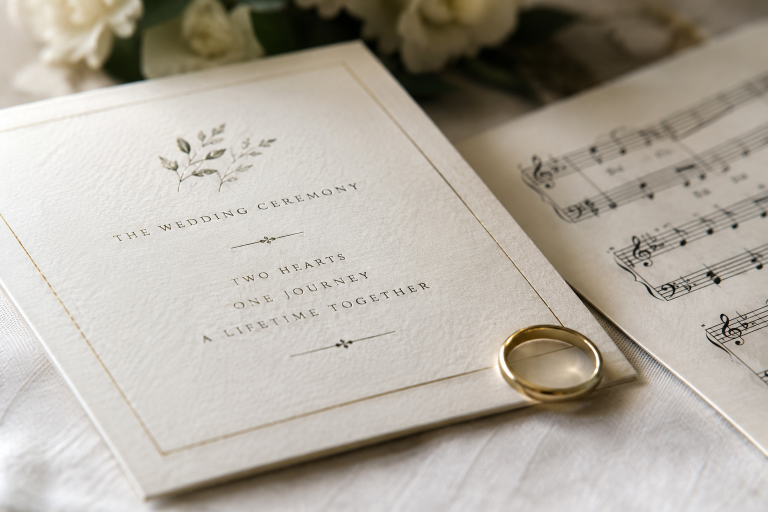
Processional, Interludes, and Recessional
Split the ceremony into segments, and decide whether to use the same song for the processional music for the couple and the wedding party or different ones for them. Play music for readings and rituals only when necessary. Select lively music for the recessional part to announce that the ceremony has finished successfully. Be ready with either a long song or a backup piece in case the processional takes longer than planned. Have the person responsible for starting the music ready.
Use Cocktail Hour as a Social Bridge
Cocktail hours provide the connection between the ceremony and reception, which is an important part of the wedding event. Thus, it is necessary that sound during this part of the event is warm and pleasant, without exceeding the expectations of the guests. Make sure you have a music plan in case guests decide to go to the lawn, patio, or separate room. A thorough timetable of events at the wedding can be useful for couples with all the details, from the pre-wedding music to dinner and farewell dances.
Shape the Reception Around Energy Changes
While following established customs is an option, there is no need to adhere to a certain format all the time. A reasonable sequence could consist of guest seating, welcoming speeches, hosting, food, making speeches, having an official dance, dancing freely, cutting a cake, and bidding farewell. There should be a logic behind the order in accordance with one’s location and preferences.
If one wants the guests to join the dance floor soon, it would be better to schedule the first dance even earlier than the dinner serving or make it a part of the dinner. This proves effective in breaking up an exhausting period of being verbally entertained. One perspective on music flow at a wedding reception suggests using an earlier dance set to change the room’s energy before the late-night party begins.
Protect the Transitions Between Formal Moments
Be sure to keep an eye on the transitional points between the ceremony and the reception. Oftentimes even small gaps can disrupt the flow of the event, i.e. the transition from Ceremony to Cocktail Hour, Cocktail Hour to Dinner, Introduction to the First Dance, Dinner to Speeches, Speeches to Dancing, and the last song to the Last Exit. The presence of soft music during the transition from one venue to another can help keep things lively.
You should appoint a designated person, such as a planner, a coordinator, or a trusted family member who will be responsible for making the changes in timing known to the officiant, photographer, venue team, and musician. This person should be allowed to make the decision concerning the adjustment in timing in case the dinner service takes longer than planned or the couple needs to take a couple of extra pictures after sunset.
Balance Personal Choices With Guest-Friendly Planning
Your music should represent your personality, but it’s better to provide your music team with an explanation than a list of songs. Provide your music team with a small playlist of songs that must be played, a don’t-play list, your favorite music genres, and a list of songs that symbolize the taste of both you and your partner. Your personal or family traditions, as well as cultural and religious customs, should be communicated to the music team promptly.
Don’t forget to explain the atmosphere you aim to achieve on your wedding. For example, you may consider using the hits that have survived generations during the first part of the wedding evening and switching to modern upbeat music later.
Plan for Speeches, Microphones, and Sound Quality
Clear speech is as crucial as nice music. Ensure that you have an individual for the operation of microphones, the positions of speakers, and whether the ceremony and reception needs to have a different sound system as well as a schedule for sound checks. Ask the venue about the maximum sound levels that can be used, especially in case of events held outside and also consider the means of preventing wind interference for outdoor microphones.
Make sure that your vows, readings, and speeches are audible to the guests who are seated at the back. Beautiful songs cannot take the place of an announcement that was missed by the guests due to the speaker standing too far away from the microphone to get his message through.
Build a Simple Planning Worksheet
Create a one-page document and share it with key vendors. For each moment, include:
- Time: For example, 4:30 p.m. for guest arrival.
- Event moment: Such as processional, entrance, toast, or open dancing.
- Music cue: Name the song, style, or announcement music needed.
- Person responsible: Identify the officiant, coordinator, MC, DJ, or bandleader.
- Backup plan: Include an alternate track, extended version, or indoor setup.
Common Wedding Music Timeline Mistakes
- Planning only the reception and overlooking ceremony or cocktail-hour music.
- Leaving no buffer for late arrivals, photos, or meal service.
- Scheduling too many speeches and traditions in one uninterrupted block.
- Forgetting music during room changes and equipment resets.
- Ignoring venue curfews, volume limits, and setup requirements.
- Waiting until the wedding week to confirm cues and responsibilities.
A Final Checklist for the Planning Meeting
- Confirm the music cutoff, venue closing time, and final send-off plan.
- Review every ceremony cue and identify who starts it.
- Choose entrance, first dance, family dance, and last dance songs.
- Share must-play and do-not-play lists with the music team.
- Confirm microphone needs for vows, readings, and speeches.
- Review guest movement, setup times, sound checks, and backup plans.
- Send the final timeline to every key vendor before the wedding day.
Conclusion
A wedding music timeline must create assurance instead of stress. Guests must be enabled to enjoy the celebration while all aspects of timing, sound, choices of music, and communication come together and operate harmoniously. It is important to plan well, consider unexpected changes in the real world, and allow every music-related moment to lead the ceremony and receptions naturally.