


Key Takeaways
Used cooking oil should not be poured down sinks, toilets, floor drains, or storm drains.
Fryer oil and grease trap waste need separate handling because they contain different materials.
Covered, clearly labeled containers help reduce spills, odors, pests, and contamination.
A written collection routine supports safer kitchen operations and more reliable pickups.
Recovered cooking oil may be processed into renewable fuel and other industrial products.
Used cooking oil is an everyday byproduct for restaurants, cafeterias, hotels, food trucks, and food production facilities. Without a clear process, a small amount of oil left in the wrong place can lead to slippery floors, clogged plumbing, odors, pests, and avoidable cleanup.
A practical program begins with secure storage and a dependable collection partner. Businesses researching responsible handling options can start with https://gfcommodities.com/ while building a plan that fits their kitchen volume, available space, and local requirements.
Why Used Cooking Oil Needs A Clear Plan
Fryer oil may be generated slowly during a normal shift, then accumulate quickly during weekend service, holidays, catering events, or menu promotions. Treating it as a managed material, rather than ordinary liquid waste, gives staff clear instructions and helps prevent an overflowing container or emergency plumbing problem.
A good plan should identify where oil is transferred, who checks the container, what belongs in it, and when it is collected. It should also make clear that used oil is not suitable for drains, where fats, oils, and grease can cool and contribute to blockages.
What Counts As Used Cooking Oil?
Used cooking oil, sometimes called waste vegetable oil or yellow grease, is oil used for frying or other food preparation. Common examples include canola, soybean, corn, peanut, and blended cooking oils. Its condition can change after use because of food particles, water, and contact with other materials.
Used Cooking Oil Versus Grease Trap Waste
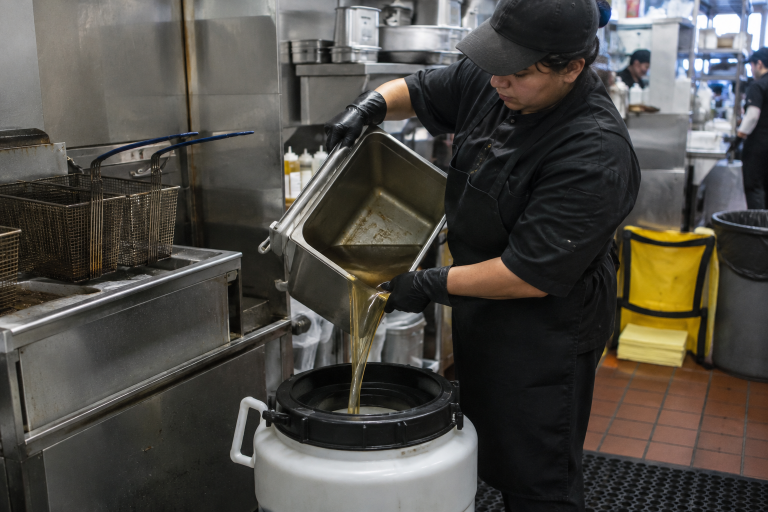
Used cooking oil: Comes directly from fryers, kettles, and production equipment. When kept relatively clean, it may be suitable for collection and recycling.
Grease trap waste: Comes from sinks, drains, and grease interceptors. It commonly contains water, food solids, and other contaminants that require different treatment.
These materials should not be mixed unless the collection provider specifically accepts both. The term “yellow grease” is often used in the industry to refer to recovered cooking oil, but acceptance standards can vary by processor and service area.
How To Store Used Cooking Oil Safely
Allow hot oil to cool enough for safe handling before transfer.
Use a durable container intended for used oil collection.
Keep the lid or cover closed whenever the container is not being filled.
Place the container on a stable surface away from traffic routes, heat sources, and storm drains.
Inspect fittings, lids, hoses, and container walls for leaks or damage.
Keep the surrounding area clean, dry, and free of trip hazards.
Place a spill kit near the collection area and make sure employees know how to report leaks. Warning signs can also help prevent staff from putting food scraps, packaging, cleaning chemicals, or water into the oil container.
A Simple Staff Procedure For Every Shift
Assign a trained employee to inspect the oil collection area at the beginning and end of each shift. They should confirm that the container is covered, has room for additional oil, and shows no signs of leakage, tampering, or unusual odor.
Label the container so employees know exactly what belongs inside.
Keep food debris, plastic, chemicals, cleaning products, and water out of the oil.
Record problems such as rapid filling, equipment damage, missed collections, or spills.
Train every new employee before they move or transfer used oil.
Staff reminder: Cool it, contain it, cover it, and report problems early.
What Businesses Should Never Do
Never pour used oil into a sink, toilet, floor drain, or storm drain.
Never mix used oil with bleach, solvents, degreasers, or other chemicals.
Never leave an open container near a doorway or busy walkway.
Never move a heavy container without proper equipment or enough assistance.
Never use an informal collector without confirming service details and recordkeeping practices.
Commercial food businesses should check the rules that apply where they operate. For example, municipal guidance on fats, oils, and grease management shows how local authorities may address improper discharge into sewer systems.
How To Build A Reliable Collection Schedule
Start by estimating how much oil the business produces during typical weeks and during peak periods. Consider seasonal events, menu changes, catering orders, and holidays that may increase fryer use. Then select a container size and pickup frequency that prevent overflow while keeping the collection area accessible.
Keep collection receipts, service dates, weight records when available, and notes about missed pickups or container issues. These records help managers identify whether the current service schedule still matches the business’s needs.
What Happens To Recovered Cooking Oil?
Collected oil may be filtered, tested, and processed for another use. Depending on its quality, market demand, and applicable requirements, recovered cooking oil can be used to produce renewable diesel, biodiesel, soaps, detergents, lubricants, and other manufactured products. It is not returned to commercial kitchens for human consumption.
How Oil Quality Can Affect Value
Water, food debris, chemicals, and mixed waste can reduce the usefulness of collected oil. Clean containers and careful transfer practices help preserve material quality and can make collection easier. Before signing up for service, ask how contamination is handled, whether records are provided, and what occurs if a container becomes damaged.
Questions To Ask Before Choosing A Collection Partner
Is the provider authorized to operate in the service area?
What materials are accepted, and what materials are prohibited?
What container size and pickup schedule are recommended?
How are service records, receipts, and weights provided?
What happens if a scheduled pickup is missed?
Is emergency collection available when needed?
Who handles spills, leaks, or damaged containers?
Common Questions About Used Cooking Oil
Can Used Cooking Oil Go In The Trash?
Large quantities of liquid oil should not be placed in ordinary trash containers. Commercial kitchens generally need a dedicated collection process, while small household amounts may be subject to local disposal guidance.
Can Water Be Mixed With Used Cooking Oil?
No. Water can increase contamination, complicate handling, and reduce the quality of the collected material.
How Often Should A Restaurant Schedule Pickup?
The right frequency depends on oil volume, container capacity, menu type, storage space, and local operating requirements.
A 2026 Checklist For Better Oil Management
Confirm local commercial fats, oils, and grease requirements.
Inspect containers regularly for leaks or damage.
Label collection containers clearly.
Train employees who handle fryer oil.
Keep a spill kit nearby.
Separate fryer oil from grease trap waste.
Review pickup needs before busy seasons.
Save service records and revisit procedures after any spill or overflow.
Conclusion
A well-managed used cooking oil program protects plumbing, supports safer work areas, and keeps a recoverable material out of the wrong waste stream. Clear staff procedures, secure storage, regular collection, and accurate records can turn an everyday kitchen byproduct into a more organized part of operations.