


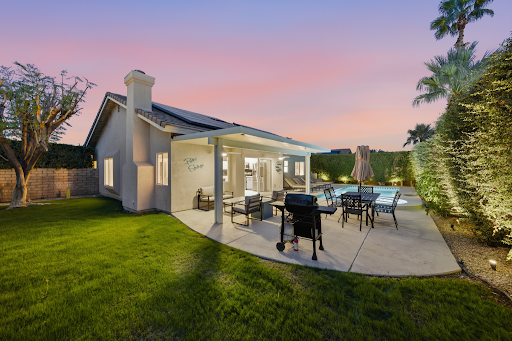
A few years ago, an agent shooting their own listing photos was a sign the shoot budget had run out. The photos looked like it, too. Small rooms looked smaller. Windows blew out. The kitchen looked dim and slightly yellow.
That’s still true for agents using the native camera app on an older phone. But it’s not the whole picture anymore.
Apps like Ovvy and Realty Pro Shots are explicitly built to let agents capture listing photos themselves with bracketed exposure, automatic HDR processing and professional editing turnaround. Reviews from agents using these tools are not shy about the results. “Better than professional photos,” reads one. “Game changer,” reads another from an agent of 18 years.
So what does a real estate photography app actually deliver and what does it mean for photographers who shoot listings professionally?
What a Real Estate Photography App Can Do
A real estate photography app solves a specific problem. It gives agents a way to capture listing photos on their own schedule, without booking a photographer, at a fraction of the cost.
The better ones handle several things automatically. Built-in exposure bracketing captures multiple frames in sequence. The app controls the phone’s settings so every shot is captured with consistent exposure and framing. Images are uploaded to an editing team or AI pipeline that handles HDR blending, color correction and basic white balance. Delivery comes back in hours, not days.
For agents listing smaller properties, rental units or homes in markets where photography fees eat significantly into the commission, a real estate photography app is a genuinely practical option. At $1 to $2 per photo on a pay-as-you-go basis or roughly $30 per month on a subscription plan, the cost difference compared to professional photography is significant.
What It Can’t Do
Here’s where honest evaluation matters.
A real estate photography app solves the capture and basic editing problem. It doesn’t solve the problems that require a trained eye on-site.
Window masking the process of blending interior and exterior exposures so windows show detail instead of a blown-out white is technically handled in app-based editing pipelines but inconsistently.
Perspective correction and straightening require either a tilt-shift lens or precise post-processing that adjusts vertical lines so walls read as truly vertical in the frame. Most real estate photography app outputs don’t apply this correction as accurately as a photographer using a professional editing pipeline.
Camera reflection removal cleaning photographer reflections out of mirrors, glass surfaces, and glossy appliances is a manual step that app-based editing largely skips.
Composition is the biggest gap. A real estate photography app gives an agent control over the shutter. It can’t give them the instinct for which corner to stand in, which rooms to shoot wide and which to shoot tight or which angle makes a small bathroom feel larger than it is.
The editing gap matters too. A professional pipeline like the one AutoHDR runs handles sky placement, window masking, white balance, camera reflection removal, and perspective straightening on every image automatically. App-based editing covers the basics. It doesn’t cover that.
What This Means for Professional Photographers
The productive response isn’t to dismiss a real estate photography app as a competitor and move on. The agents using these tools represent one end of the market budget-sensitive listings, quick turnarounds, low-margin properties. That has always been the end of the market where professional photography was a harder sell.
The agents booking professional photographers for listings over $400K, for luxury properties, for new construction or for anything where the photos need to do real selling work those agents aren’t switching to an app. They’re increasingly looking for photographers who can deliver more than photos. The real estate photography app is pulling a floor out from under the lowest-price tier. The response isn’t to compete at that price, it’s to be clearly better and clearly worth more at the tier above it.
How to Talk About It With Agents
If an agent mentions they’ve been using a real estate photography app for smaller listings, the conversation doesn’t have to be defensive. “That makes sense for those properties. For your listings above a certain price point, here’s what the difference looks like in the photos.” Then show them side-by-side. Let the window masking, perspective correction and composition speak for themselves.
Most agents know the difference when they see it. They just need you to put it in front of them.
Final Thoughts
A real estate photography app is a legitimate tool for a specific part of the market. Professional photographers who understand exactly where those tools fall short are better positioned than ever to articulate their value and to hold the pricing that reflects it.