


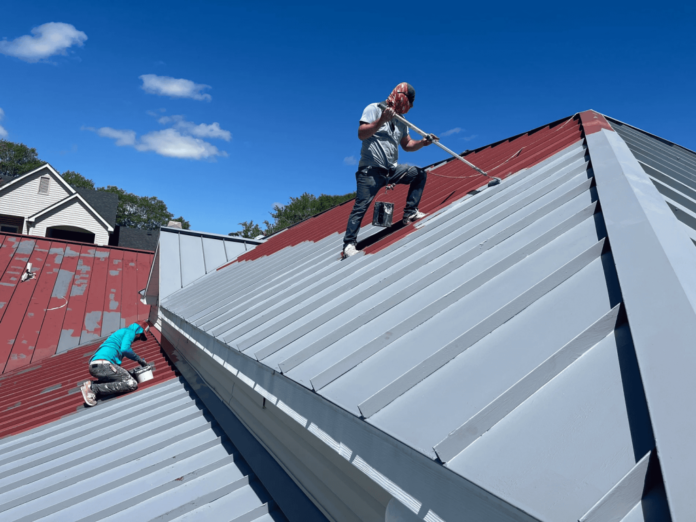
Metal roofs look tough. They often last decades. But they are not maintenance free.
Look closely at an aging commercial metal roof. Rust creeps along seams. Paint fades and chalks. Screws loosen. You may spot a leak where panels meet flashing.
Most of these roofs do not need replacement. A coating can stop rust, seal every fastener, and add 10 to 15 years of life. It costs far less than new panels.
Why Does Metal Deteriorate?
Factory finishes break down under UV light. Paint chalks. Galvanized layers thin out. Bare metal meets moisture and air. Rust begins.
Rust spreads. It travels along seams and around screws. It eats pinholes through panels. Water enters. Interior damage follows.
Fasteners are a hidden problem. Screws expand and contract at a different rate than panels. Over thousands of heat cycles, they loosen. Rubber washers dry and crack. Each loose screw is a future leak.
How Do Coatings Stop Corrosion?
Prep comes first. Crews clean the roof fully. Loose rust is removed. Bad spots get rust blocking primers. This step decides how long the job lasts.
Then the coating goes on. It wraps panels, seams, screws, and flashing in one waterproof skin. Moisture and air can no longer reach the metal. Corrosion stops because its fuel is gone.
Think of it as a protective suit for your roof. Existing surface rust gets sealed in place. It cannot spread further.
Why Seal Every Fastener at Once?
Spot repairs on metal roofs frustrate owners. You seal one screw. The next storm reveals three new leaks. It never ends.
Metal roof coatings take the opposite approach. They seal thousands of fasteners in a single application. Every seam gets bridged. Every flashing joint gets wrapped.
The result changes daily life for building managers. Leak calls drop sharply. Tenants stop complaining. The roof fades into the background where it belongs.
Does Flexibility Really Matter?
Yes, more than most people realize. Metal moves a lot with temperature. A long panel run can grow and shrink noticeably between winter and summer.
Cheap rigid paints crack under this movement. Often within one or two seasons. Then water enters the cracks and the failure starts over.
Quality metal coatings are elastomeric. That is a technical word for stretchy. They expand and contract with the panels. The waterproof seal holds year after year.
Coating Types for Metal Roofs
| Type | Flexibility | Rust Blocking | Best For |
| Acrylic elastomeric | High | Needs primer | Budget jobs, mild rust |
| Silicone | Very high | Needs primer | Ponding areas |
| Polyurethane | Very high | Excellent | Heavy rust, traffic |
Primer choice matters as much as the topcoat. Bare metal spots need a rust inhibiting primer first. Skipping this step shortens coating life.
Will It Cut Energy Costs?
Most metal coatings are white and reflective. A dark weathered metal roof can be 50 degrees hotter than a coated one on a sunny day.
Less roof heat means less heat inside. Warehouses and factories feel the difference fast. AC bills drop. Upper floors get more comfortable.
Many owners find energy savings alone to justify the project. The extra roof years are a bonus.
Ask local metal roof coatings experts to estimate both the energy savings and the added lifespan for your building.
What Happens During the Project?
Inspection first. The contractor checks rust depth and panel condition. Severely corroded panels may need replacement before coating.
Then cleaning and prep. Rust treatment. Screw tightening. Seam repairs. This groundwork is critical.
Coating application followed by spray or roller. Most buildings stay open. No tear off. No structural work. Crews usually finish in days.
Is Your Roof a Candidate?
The sweet spot is surface rust and fading with solid panels underneath. Occasional leaks are fine. Widespread holes through panels are not.
A pro inspection gives the real answer. Qualified metal roof coatings contractors will be honest. If the coating fits, they will show you why. If the replacement is smarter, they will say so.
FAQs
Can coating really stop existing rust?
It seals rust away from moisture and air, which halts spread. Loose rust must be removed and primed first.
How long does it last on metal?
Typically 10 to 15 years. Elastomeric types handle metal movement well over that span.
Will it seal all my fastener leaks?
A full coating encapsulates every fastener at once. This ends the cycle of chasing individual leaks.
Does color matter for energy savings?
Yes. White and light colors reflect the most heat. Dark coatings protect well but save less energy.
Can the building stay open?
Almost always. There is no tear off and minimal noise. Most jobs finish in a few days.