


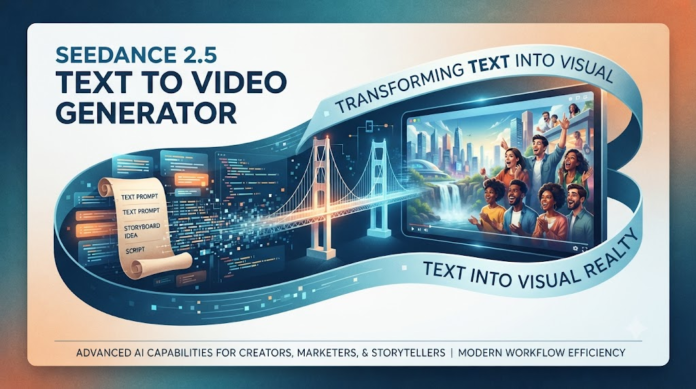
The landscape of digital media production is undergoing a profound transformation. As audiences demand increasingly dynamic, high-quality visual assets across platforms, content creators, marketers, and enterprises continuously seek tools that streamline production without compromising creative vision. Recent advancements in artificial intelligence have steadily closed the gap between conceptualization and execution, particularly in the realm of motion graphics and automated visual synthesis. In this evolving ecosystem, the introduction of the Seedance 2.5 text to video generator marks a notable milestone, offering refined technological capabilities designed to address modern workflow demands.
Bridging the Gap Between Concept and Visual Reality
For years, video production required substantial investments in time, specialized software expertise, and physical equipment. Traditional editing pipelines often bottlenecked marketing campaigns and social media publishing schedules. The advent of generative AI models has gradually shifted this paradigm, allowing creators to translate text-based prompts directly into moving images.
The Seedance 2.5 text to video generator represents a maturity in this technology, focusing heavily on output fidelity, coherence, and user accessibility. Rather than functioning as a mere novelty, the system is engineered to integrate into professional workflows, assisting teams in rapidly prototyping visual concepts, generating B-roll footage, and scaling content production across diverse digital channels.
Key Technological Upgrades and Enhanced Capabilities
At the core of any advanced AI media tool is its underlying architecture. The development team behind the platform has concentrated on refining several critical performance metrics to elevate the overall user experience.
- Temporal Coherence and Stability: One of the historical challenges in AI-generated video has been the flickering or unnatural morphing of objects between frames. Improvements in this version focus on maintaining structural consistency, ensuring that characters, backgrounds, and motion paths remain stable throughout the generated sequence.
- Prompt Adherence: Translating complex narrative instructions into visual elements requires sophisticated natural language processing. The enhanced parsing engine within the Seedance 2.5 text to video generator interprets nuanced stylistic descriptors, lighting cues, and compositional layouts with greater precision, reducing the need for iterative prompt engineering.
- Rendering Efficiency: Time-to-output remains a critical factor for professional teams working under tight deadlines. Optimized generation pipelines deliver faster rendering times, enabling creators to iterate rapidly and experiment with multiple creative directions before finalizing a project.
Professional creators and digital marketing agencies looking to evaluate these enhancements firsthand can explore the functionality directly through the Seedance 2.5 text to video generator, which provides an accessible environment for testing automated video synthesis.
Transforming Marketing Campaigns and Social Media Content
In the fast-paced world of digital marketing, agility is paramount. Brands must frequently refresh their campaigns to capture consumer attention across platforms like Instagram, TikTok, YouTube, and LinkedIn. Producing unique video assets for each platform traditionally demands extensive resources.
By incorporating generative tools into their standard operating procedures, marketing teams can generate targeted visual variations for localized campaigns or seasonal promotions in a fraction of the traditional timeframe. For instance, e-commerce brands can visualize promotional concepts for new product lines simply by drafting descriptive parameters, allowing for rapid A/B testing of different aesthetic approaches. This capability democratizes high-end visual storytelling, enabling smaller businesses and independent creators to compete effectively with larger enterprises that possess dedicated in-house production studios.
Streamlining Workflow Efficiency for Modern Teams
Efficiency in modern media production extends beyond rendering speeds; it encompasses the entire collaborative lifecycle of a project. When creative directors, copywriters, and video editors can share a unified platform for conceptualization, the friction traditionally associated with handoffs between departments is significantly reduced.
Text-to-video technologies act as an advanced ideation board. Writers can draft a script and simultaneously generate rough visual drafts to accompany the text, providing stakeholders with a tangible preview of the final concept during early-stage pitch meetings. This capability minimizes misunderstandings regarding tone, style, and pacing, ensuring that the entire production team remains aligned from inception to final delivery.
Furthermore, integration into existing editing ecosystems ensures that AI-generated clips can be easily imported, color-graded, and spliced alongside traditional footage. This hybrid approach allows professionals to leverage automation for repetitive or resource-heavy tasks—such as background generation or transition creation—while retaining complete creative control over the final cut.
Practical Use Cases Across Industries
The versatility of contemporary generative video tools extends far beyond standard advertising. Various sectors are finding innovative applications for these technologies:
- Corporate Communications: Internal training materials, product walkthroughs, and stakeholder presentations can be enhanced with dynamic visual aids generated on demand, replacing static stock imagery with custom animations tailored to specific messaging.
- Educational Content: Educators and instructional designers utilize automated video generation to illustrate complex scientific concepts, historical events, or theoretical models, making abstract ideas more accessible to visual learners.
- Independent Filmmaking and Storyboarding: Independent directors and screenwriters use rapid scene generation to build detailed video storyboards, helping secure funding and refine visual pacing before committing to principal photography.
Looking Ahead: The Future of AI-Assisted Media Production
As artificial intelligence continues to mature, tools like the Seedance 2.5 text to video generator hint at a future where technical barriers to visual expression are continually lowered. Rather than replacing human creativity, these technologies serve as force multipliers, freeing creators from tedious technical constraints and allowing them to focus on narrative depth, strategic messaging, and emotional resonance.
The industry’s trajectory suggests that future iterations will offer even deeper integration with real-time data, interactive storytelling elements, and hyper-personalized content delivery. For organizations and individuals willing to adapt their workflows, embracing these tools is no longer merely an option for gaining a competitive edge—it is becoming a fundamental component of modern media literacy and production strategy.
Media Contacts
For additional information, interview requests, or further inquiries regarding this announcement, please contact:
- Contact Person: Ming Hu
- Email: capcutweb@bytedance.com
- Company Name: CapCut