


Post Preview
For homeowners and property managers in Greater New Orleans, a storm-ready landscape starts with finding problems before wind and rain expose them. Professional tree services across Greater New Orleans LA can help identify weak limbs, unstable trees, root-zone concerns, and clearance issues near homes, driveways, sidewalks, and utility areas. Early planning can also give property owners more time to compare options, arrange access, and complete necessary work under safer conditions rather than during an emergency response.
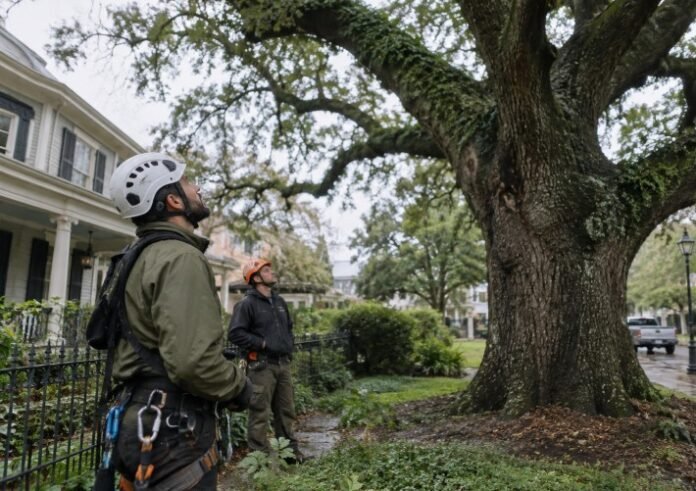
A Perfect Cut Tree Service provides tree removal, trimming, stump grinding, hazardous tree assessments, storm preparation, emergency cleanup, tree preservation, planting, and construction-related consulting. The goal is not simply to cut trees down. It is to make a sound decision about whether a tree can be pruned, monitored, preserved, or should be removed because it creates an unacceptable risk. That decision should consider the tree’s condition, its position on the property, and the people or structures that could be affected if a limb or trunk fails.
Key Takeaways
- A professional hazardous-tree assessment is the most practical first step before severe weather.
- Dead limbs, cracks, cavities, leaning trunks, lifted roots, and branches over structures deserve prompt attention.
- Properties in Greater New Orleans must account for high winds, heavy rain, flooding, mature trees, and closely spaced homes.
- Proper pruning can reduce specific hazards, but excessive cutting can create additional stress and weak regrowth.
- After a storm, stay clear of downed wires, hanging limbs, split trunks, and uprooted trees.
- Tree risk is not limited to the canopy; root damage, changing soil conditions, and nearby construction can affect stability.
Table of Contents
- The Fastest Way to Reduce Tree Risk
- Why Local Conditions Matter
- What a Hazardous-Tree Assessment Looks For
- Tree Services That Address Storm Risk
- A Storm-Preparation Plan
- What to Do After a Tree Falls
- Safety and Tree Preservation
- Frequently Asked Questions
What Is the Fastest Way to Reduce Tree Risk Before a Storm?
The fastest, most responsible step is to arrange a hazardous-tree assessment before a storm approaches. A trained arborist can examine visible defects that are easy to miss from the ground, including deadwood high in the canopy, weak branch unions, decay symptoms, cracks, poor prior cuts, and root disturbance. The inspection should also consider what the tree could strike if it fails.
Appearance alone is not a reliable safety test. A tree can have a green canopy while carrying a compromised limb or trunk defect. Conversely, a mature tree with a manageable issue may be a good candidate for selective pruning and continued monitoring rather than removal.
Property owners can help make an assessment more useful by noting recent changes. A newly developed lean, bark cracking, mushrooms near the base, repeated limb drop, or soil lifting after rain may provide important context. Photographs taken over time can also help show whether a condition is new or appears to be worsening.
Why Does Greater New Orleans Need Specialized Storm Tree Care?
Tree decisions in New Orleans, Metairie, Kenner, Jefferson, Harahan, River Ridge, and Destrehan are shaped by weather and density. Tropical weather, thunderstorms, heavy rainfall, and saturated ground can combine with wind to place additional stress on trees and roots. The City of New Orleans notes that hurricane-related threats include high winds, heavy rain, flooding, and power outages, all of which can turn an existing tree defect into an urgent property concern.
In a compact neighborhood, even a small failure can block access, damage a roof, affect a parked vehicle, or interfere with utility work. Mature live oaks, cypress, palms, and other established trees also deserve species- and site-specific recommendations instead of a one-size-fits-all trimming approach.
Drainage and site changes matter as well. Extended standing water, altered grading, trenching, and equipment traffic can affect the root zone, even when the canopy initially looks unchanged. A careful recommendation should account for the available space for the tree, the surrounding pavement, prior storm exposure, and the distance to potential targets.
What Does a Hazardous-Tree Assessment Look For?
A useful assessment evaluates the tree, its growing environment, and the surrounding targets. A Perfect Cut Tree Service can use that information to explain the practical options and the reason behind each recommendation.
Important inspection points include:
- Structure: Cracks, cavities, dead branches, included bark, co-dominant stems, and weak attachments.
- Root stability: Soil lifting, exposed roots, fungal growth, root damage, or a newly leaning trunk.
- Tree health: Dieback, unusual leaf loss, decay symptoms, pest damage, and declining vigor.
- Targets: Homes, fences, sidewalks, vehicles, streets, occupied spaces, and power lines.
- Site history: Flooding, wind damage, lightning, construction activity, soil changes, and previous pruning.
The assessment should distinguish between an observable defect and the level of risk it creates at that particular location. For example, a limb over an unoccupied part of a yard may call for a different response than a similar limb over a bedroom, driveway, play area, or public sidewalk.
No inspection can guarantee that a tree will never fail during extreme weather. It can, however, identify conditions that justify action before a storm makes the work more difficult and dangerous.
Which Tree Services Can Reduce Storm Damage?
- Tree trimming and shrub pruning: Removes dead or overextended growth and improves clearance from structures when appropriate.
- Hazardous-tree assessment: Helps determine whether pruning, monitoring, preservation, or removal is the most suitable response.
- Tree removal: Addresses dead, severely compromised, or poorly located trees that pose a substantial risk.
- 24/7 emergency tree removal and cleanup: Supports safe access after storm damage or a fallen tree.
- Stump grinding: Removes a remaining stump after a tree is taken down and prepares the area for other landscape plans.
- Tree preservation and fertilization: Supports long-term care when retaining a tree is reasonable.
- Consulting and construction permitting: Helps homeowners and contractors plan work around trees and local requirements.
Not every service is appropriate for every tree. The scope of work should match the observed problem: targeted pruning may address a dead limb or a building-clearance issue, while a tree with major decay or root failure concerns may require a more urgent removal discussion. Crews should also plan for safe work zones, equipment access, and the protection of nearby landscape features where practical.
What Should a Greater New Orleans Storm-Preparation Plan Include?
Begin before peak storm activity, not after a warning is issued. Schedule an assessment, remove deadwood that threatens occupied areas, and inspect trees after unusually heavy rain, flooding, lightning, or high winds. Keep driveways and access routes usable for emergency responders and tree crews. If construction is planned near a mature tree, ask about root protection before equipment or materials enter the area.
It is also helpful to identify trees that could affect gates, service panels, roofs, vehicles, or the only usable route onto the property. Addressing obvious clearance problems ahead of time can make post-storm access easier. Homeowners should avoid attempting high pruning, climbing, or chainsaw work themselves, particularly when trees are near structures or electrical equipment.
Do not assume that cutting more is safer. Research from the University of Florida shows that poor pruning practices can make trees more susceptible to wind failure. Proper work should focus on specific defects and sound structure, not indiscriminate topping or severe canopy removal.
What Should Property Owners Do After a Tree Falls?
- Keep people and pets away from downed lines, hanging limbs, split trunks, and exposed root plates.
- Report downed electrical lines to the utility provider, and do not attempt to move branches that are touching them.
- Take photographs from a safe distance for insurance documentation.
- Contact a qualified tree professional for emergency removal and cleanup.
- Have nearby standing trees assessed, especially if they are leaning, have broken limbs, or show soil movement.
Even when a tree remains standing, storm damage can leave partially detached branches or hidden cracks that are not safe to inspect from a ladder. Treat a changed tree cautiously until it can be evaluated. Do not park, walk, or place equipment beneath hanging branches, and keep others away from the area until the hazard has been addressed.
How Can Safety and Tree Preservation Work Together?
Removal should not be the automatic answer. A tree may be retained when its defects are limited, its roots remain stable, and carefully planned pruning can reduce a defined hazard. Preservation may also be appropriate for trees that provide valued shade, character, and environmental benefits.
In some cases, a monitoring plan is a reasonable middle ground. This may include periodic inspections, observation after severe weather, and prompt reassessment if a lean increases, cracks appear, limbs decline, or the surrounding site changes. Monitoring does not eliminate risk, but it can support informed decisions for trees that remain suitable for retention.
Removal may be the safer recommendation when a tree is dead, severely decayed, structurally split, uprooting, or likely to strike a home, roadway, or frequently occupied area. A Perfect Cut Tree Service serves communities throughout Greater New Orleans, including Uptown, Lakeview, Old Metairie, Audubon, the Garden District, and nearby areas, with recommendations based on the individual tree and property rather than a blanket rule.
Frequently Asked Questions
Does A Perfect Cut Tree Service provide emergency tree removal?
Yes. The company offers 24/7 emergency tree removal and cleanup for fallen or storm-damaged trees. Stay away from unstable trees and utility hazards until the site has been evaluated.
Can a storm-damaged tree be saved?
Sometimes. The decision depends on the condition of the trunk, major limbs, roots, canopy, and tree health, as well as the location. Trees with manageable damage may be pruned and monitored, while those with severe structural damage may require removal.
Why is stump grinding useful after removal?
Stump grinding can improve access, reduce a tripping obstacle, and make room for lawn restoration, planting, or other landscaping work.
When should homeowners schedule a tree assessment?
Schedule one before storm season when possible, and request a follow-up assessment after significant wind, flooding, lightning, or visible damage. Prompt attention is particularly important when a tree is near a home, driveway, sidewalk, or utility line.
