


Introduction
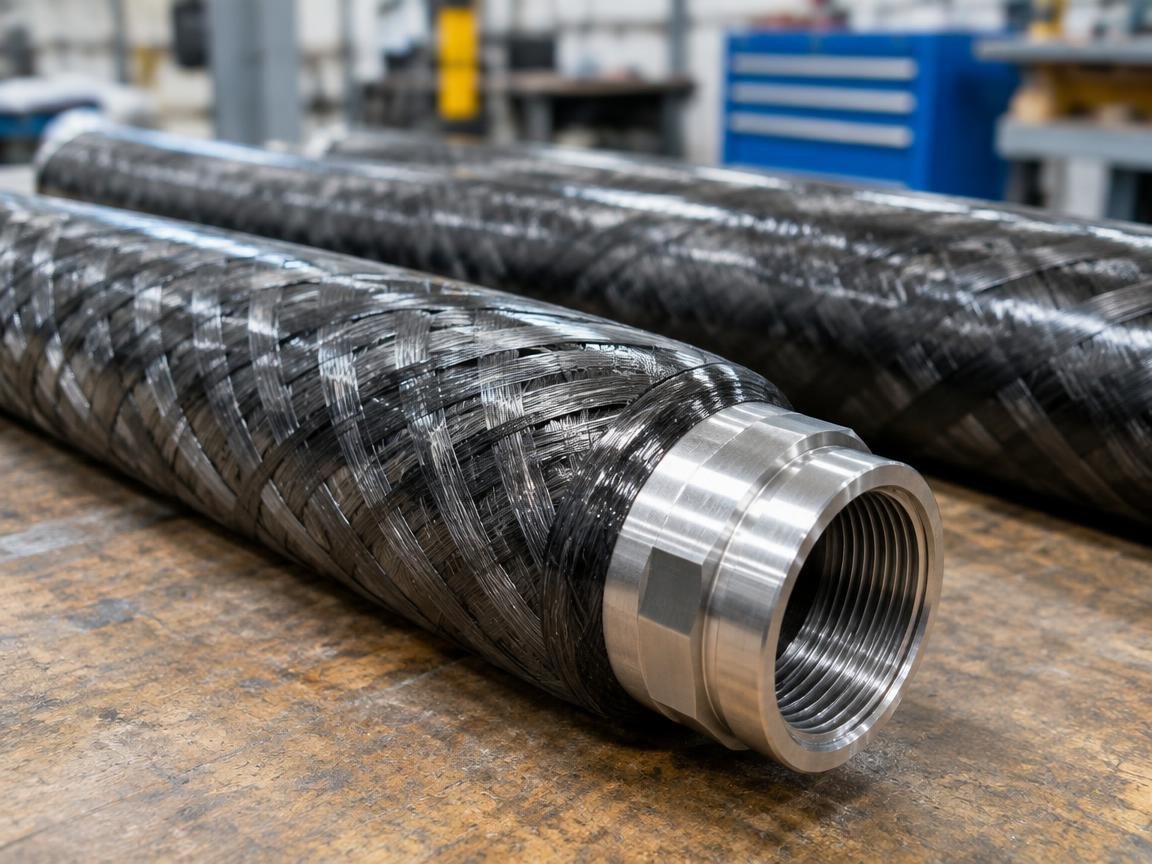
Imagine building structures that are lighter than aluminum, yet stronger than steel. This isn’t science fiction; it’s the reality of advanced composite manufacturing. At the heart of this innovation is filament winding, a technique that creates remarkably strong yet surprisingly light tubes.
These versatile components, often developed as Engineered filament wound tubes, offer unparalleled strength-to-weight ratios and design flexibility. They are essential in industries ranging from aerospace to water treatment.
In this comprehensive guide, we will journey through the fascinating world of filament winding. We’ll uncover its core principles, the advanced materials it employs, and how engineers precisely tailor tubes for specific performance needs. We’ll also explore the diverse industries that rely on these high-performance components and examine the manufacturing process from start to finish.

The filament winding process is a testament to the ingenuity of composite materials engineering. It allows for the creation of structures with an exceptional strength-to-weight ratio, superior structural efficiency, and the precise placement of fibers to meet exact performance requirements. This advanced manufacturing technique has revolutionized numerous industries by enabling the production of components that were once impossible or impractical to achieve with traditional materials. The ability to customize fiber orientation and material composition makes filament winding an indispensable tool in modern engineering.
Understanding Filament Winding and How It Works
Filament winding is one of the oldest composite manufacturing processes that remains widely used today, and for good reason. It’s a sophisticated technique designed to produce high-performance, lightweight structures, particularly those with cylindrical or closed-end geometries.
Principles of the Filament Winding Fabrication Process
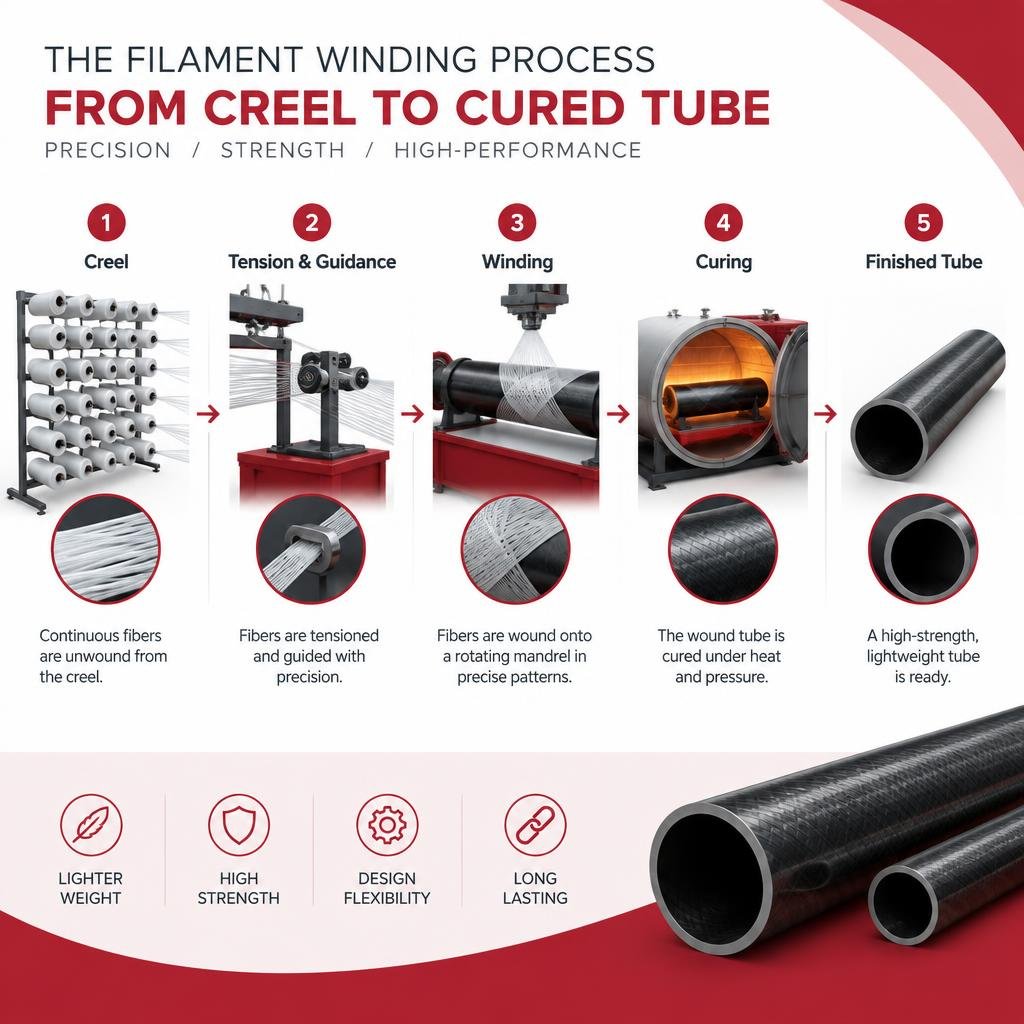
At its core, filament winding involves meticulously wrapping continuous fibers, impregnated with a thermosetting resin, around a rotating mandrel. This entire operation is typically controlled by sophisticated Computer Numerical Control (CNC) machinery, ensuring precision and repeatability.
The process begins with spools of reinforcement fibers, such as glass or carbon, which are fed through a resin bath. Here, they become thoroughly saturated with the chosen resin system. This impregnated “tow” or “roving” is then guided by a payout head, which moves back and forth along the length of the rotating mandrel. The CNC system dictates the speed of the mandrel’s rotation and the traverse speed of the payout head, controlling the winding angle and pattern of the fibers.
Key variables meticulously controlled during this stage include the fiber type, the resin content, the winding angle, the bandwidth of the fiber tow, and the overall thickness of the fiber bundle being laid down. Once the desired wall thickness and fiber architecture are achieved, the composite structure undergoes a curing process. This often involves heating in an oven or autoclave, which cross-links the resin, solidifying the material into a rigid, high-strength component. Finally, after curing, the mandrel is typically extracted, leaving behind the hollow, finished product.
Filament winding processes can be broadly categorized into two types based on their application:
- Discontinuous Winding: This method is primarily used for manufacturing high-pressure parts and complex components, such as pressure vessels or aerospace structures. It involves winding a finite length of material onto a single mandrel, which is then removed.
- Continuous Winding (e.g., Drostholm Process): Utilized for producing long lengths of low-pressure pipes, this process employs an endless band mandrel. The pipe continuously moves off the mandrel as new material is wound, allowing for high-volume production.
The inherent suitability of filament winding for automation, particularly with multi-axis machines and robotic systems, ensures high precision, consistency, and efficiency in manufacturing.
Wet Winding vs. Dry Winding Methods
The method of impregnating the fibers with resin is a critical choice in filament winding, influencing material properties, processing efficiency, and cost. The two primary approaches are wet winding and dry winding (using pre-impregnated materials).
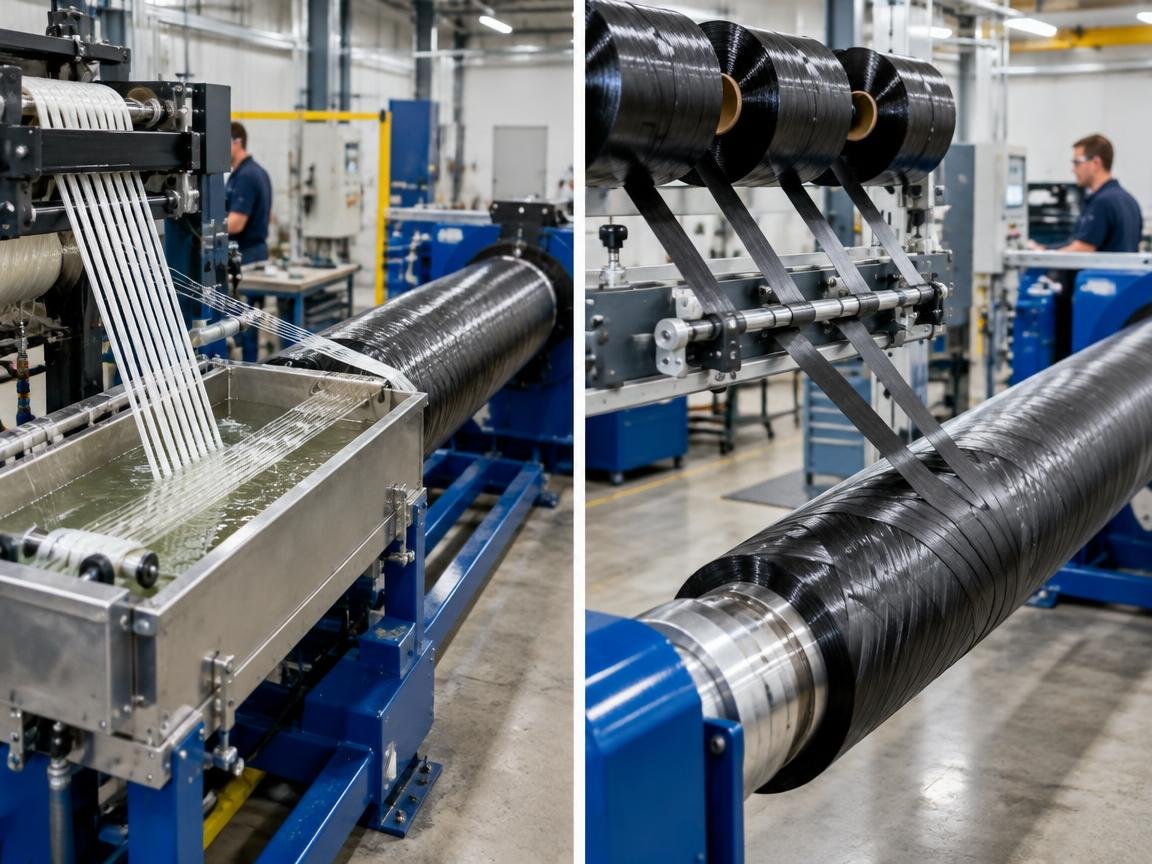
Wet Winding: In wet winding, the reinforcement fibers are drawn directly from their spools through a resin bath located immediately prior to the winding point. This impregnates the fibers with a liquid resin system in real-time.
- Advantages: Typically uses lower-cost materials as the resin and fibers are purchased separately. The resin systems often have a longer shelf life before mixing. Low-viscosity resins can be used, allowing for good fiber wet-out.
- Disadvantages: Achieving a consistent resin-to-fiber ratio can be more challenging, potentially leading to variations in mechanical properties. There can be more resin waste and potential for air entrapment. The winding speed might be limited by the time required for proper fiber wet-out. The inner surface of a filament wound structure is smooth, but the outer surface typically requires secondary operations due to the resin-rich outer layer.
Dry Winding (Pre-Impregnated Tows/Towpregs): Dry winding utilizes “prepregs” – fibers that have been pre-impregnated with a precisely controlled amount of resin by a supplier. These prepregs are typically semi-cured (B-staged) and require refrigeration for storage.
- Advantages: Offers highly consistent resin content, leading to more predictable and uniform mechanical properties. Cleaner process with less mess and waste. Can often achieve faster winding speeds because the impregnation step is eliminated from the winding machine.
- Disadvantages: Pre-impregnated materials are generally more expensive than separate fibers and resins. They have a limited shelf life, even under refrigeration, and require careful storage conditions. The resin viscosity might be higher, potentially affecting fiber compaction.
Regardless of the method, the sizing chemistry applied to fiberglass rovings is crucial. This chemical coating on the fibers ensures proper bonding with the resin matrix, which is vital for the composite’s overall strength and durability, though some resins like polyurethanes might have different compatibility requirements.
Material Systems in Engineered Filament Wound Tubes
The performance of a filament wound tube is fundamentally determined by the synergistic interaction between its reinforcement fibers and the surrounding resin matrix. Engineers meticulously select these materials to achieve specific mechanical, thermal, and electrical properties.
Reinforcement Fibers and Volume Fractions
The choice of reinforcement fiber is paramount, as it provides the primary structural strength and stiffness to the composite. Common fibers include:
- E-Glass Fibers: Economical and widely used, offering good strength, stiffness, and excellent electrical insulation properties.
- S-Glass Fibers: A higher-strength variant of glass fiber, providing superior tensile strength and stiffness compared to E-glass, often used in aerospace and defense applications.
- Carbon Fibers: Known for their exceptional strength-to-weight ratio, high stiffness, and good fatigue resistance. Carbon fibers are lighter than glass but more electrically conductive.
- Aramid Tows (e.g., Kevlar): Offer high tensile strength, excellent impact resistance, and vibration dampening properties, but can be susceptible to compressive failure.
- Boron Filaments: Extremely stiff and strong, primarily used in high-performance aerospace applications due to their high cost.
A significant advantage of filament winding is its ability to achieve a very high fiber volume fraction, typically ranging from 60% to 80%. This high proportion of strong, continuous fibers within the composite matrix directly contributes to the material’s superior mechanical properties and its remarkable strength-to-weight ratio. For instance, the density of filament-wound glass composites is approximately 0.072 lb/in³, which is lighter than water, underscoring their lightweight nature. These materials can achieve specific tensile strengths that far surpass traditional metals.
Resin Formulations and Specialty Matrix Materials
The resin system, or matrix, binds the fibers together, transfers loads between them, and protects them from environmental damage. It also largely dictates the composite’s thermal, chemical, and electrical properties.
Common thermosetting resins used in filament winding include:
- Epoxies: Versatile resins offering excellent mechanical properties, good adhesion, and chemical resistance. They are widely used in high-performance applications.
- Vinyl Esters: Provide good chemical resistance, especially to acids and alkalis, and are often used in corrosive environments.
- Polyesters: More economical than epoxies or vinyl esters, suitable for general-purpose applications where extreme performance is not required.
- Polyurethanes: Increasingly used due to their good toughness, flexibility, and reduced volatile organic compound (VOC) emissions compared to some other resins.
- Phenolic Resins: Offer excellent fire resistance and high-temperature performance.
- Furans and Polyimides: Used in highly specialized, extreme high-temperature applications.
Resin systems can be custom-developed to provide specific characteristics. For example, some resins can operate in extreme temperature ranges, from cryogenic stability at -424°F to thermal thresholds exceeding 500°F+ (though resin limits typically cap stable operation for special versions around 500°F). Resins can also be formulated to modify electrical conductivity or resistance, or even dyed for branding or to denote specific characteristics.
Beyond the primary fibers and resins, filaments can also be wound around specialty materials to enhance functionality. For example, winding around vulcanized fiber or thermoplastics can provide additional insulating properties, create a chemical barrier, or offer a smooth internal liner. This adaptability is a key reason why Engineered filament wound tubes are so versatile across various industries.
Material Matrix Selection for Composite Tubing
Selecting the optimal fiber and resin combination is a complex engineering decision, balancing performance requirements with cost and manufacturing considerations. The following table provides a general comparison:
Material Combination Strength (Tensile/Compressive) Thermal Resistance Dielectric Performance Cost (Relative) E-Glass/Polyester Good / Good Moderate Excellent Low E-Glass/Vinyl Ester Good / Good Good Excellent Medium E-Glass/Epoxy Very Good / Very Good Very Good Excellent Medium S-Glass/Epoxy Excellent / Excellent Very Good Excellent High Carbon/Epoxy Excellent / Excellent Excellent Good (Conductive) High Aramid/Epoxy Excellent (Tensile) / Good (Comp.) Good Excellent High Note: “Good” indicates suitable for many applications, “Very Good” for demanding applications, and “Excellent” for high-performance or specialized needs. Cost is relative to other composite options.
This table highlights that while carbon fiber composites offer superior strength and thermal resistance, their electrical conductivity might be undesirable for certain applications, making glass fibers a better choice for electrical insulation. Similarly, the cost-effectiveness of polyester resins makes them suitable for less demanding applications, while epoxies and specialized fibers are reserved for high-performance scenarios.
Structural Optimization and Fiber Architecture
One of the most powerful aspects of filament winding is the ability to precisely control the fiber architecture, allowing engineers to “design in” specific mechanical properties. This customization is achieved primarily through manipulating the winding angle.
Performance Optimization for Engineered Filament Wound Tubes
The angle at which the fibers are wound relative to the mandrel’s axis directly influences the mechanical properties of the finished tube. This allows for tailored performance optimization:
- High Angle (Hoop Winding): When fibers are laid down at a high angle, typically around 85 degrees relative to the mandrel, the resulting structure exhibits very high circumferential or “burst” strength. This is crucial for applications like pressure vessels that need to withstand significant internal pressure.
- Lower Angle (Helical/Axial Winding): For applications requiring high axial mechanical performance, such as compressive and tensile strengths along the length of the tube, fibers are wound at lower angles, closer to 30 degrees to the mandrel. This provides excellent resistance to pulling or crushing forces.
- Polar Winding: Involves fibers running nearly parallel to the axis of rotation, often used for end closures or to provide axial strength in conjunction with helical windings.
By combining these winding angles, engineers can create multi-layered structures with anisotropic properties, meaning the material’s strength varies depending on the direction of the applied force. This precise control allows filament wound tubes to achieve impressive mechanical properties, including up to 150,000 psi tensile strength and up to 80,000 psi compressive strength. This level of strength, combined with their lightweight nature, contributes to filament wound structures having the highest strength-to-weight ratio of any known structural material.
Filament Winding vs. Alternative Manufacturing Techniques
Filament winding stands out among composite manufacturing methods due to its unique capabilities, particularly in creating hollow, high-performance structures. Comparing it to other techniques like convolute winding and pultrusion reveals its distinct advantages:
Feature Filament Winding Convolute Winding Pultrusion Fiber Orientation Highly flexible (variable angles, helical, hoop) Primarily circumferential or axial (layers) Unidirectional (axial) Mechanical Strength Anisotropic, optimized for stress directions Good circumferential, limited axial Excellent axial, limited transverse Tooling Cost Moderate to High (CNC mandrels) Low (simple mandrels) Moderate to High (dies) Geometry Hollow, cylindrical, closed-end vessels Hollow, cylindrical, constant cross-section Constant cross-section (solid or hollow) High-Pressure Perf. Excellent Limited (often for lower pressure) Not typically for pressure vessels Fiber Continuity Continuous throughout the structure Often discontinuous layers Continuous in axial direction Filament winding’s ability to precisely orient continuous fibers throughout the entire structure gives it a significant edge in applications requiring high burst strength and specific axial performance. Convolute winding, while simpler and more economical for certain applications, typically involves wrapping pre-impregnated sheets or narrow strips around a mandrel, resulting in less fiber continuity and generally lower mechanical performance, especially under high internal pressures. Pultrusion, on the other hand, excels at producing continuous, constant cross-section profiles with excellent unidirectional strength but lacks the multi-directional fiber placement capability of filament winding.
When compared to traditional materials, filament wound tubes offer compelling advantages:
- Lightweighting: A glass-reinforced tube can be 50% lighter than a comparable 7075 T6 aluminum one.
- Structural Efficiency: They can achieve over 2x structural efficiency in pressure-per-pound terms, meaning they offer more strength for less weight.
- Thinner Walls: Despite superior strength, they can have a 38% thinner wall than an aluminum equivalent.
- Superior Strength-to-Weight Ratio: Filament wound structures possess the highest strength-to-weight ratio of any known structural material, making them ideal for weight-critical applications.
Industrial Applications and Engineering Advantages
The unique combination of strength, lightweight, and customizable properties makes filament wound tubes indispensable across a wide array of industries.
Industrial Applications of Engineered Filament Wound Tubes
The versatility of filament winding allows for its application in demanding environments and critical components:
- Pressure Vessels: This is a cornerstone application. Filament winding is used to produce lightweight, high-pressure composite pressure vessels (CPVs), including Type 4 vessels for storing gases like LPG and CNG. These can achieve weight savings of up to 75% compared to metallic vessels, revolutionizing gas storage and transportation.
- Rocketry and Defense: Essential for missile casings, rocket motor casings, and other lightweight components where high strength-to-weight ratios are critical for performance.
- Centrifuges: Used for manufacturing lightweight tubes for centrifuge parts, where high rotational speeds demand materials with exceptional integrity and low mass.
- Water Filtration: Components for reverse osmosis (RO) and water filtration systems, where corrosion resistance and high-pressure capabilities are vital.
- Electrical Power Distribution and Control: High-voltage insulating tubes, transmission poles, and components for switchgear benefit from the excellent dielectric properties and structural integrity of filament wound composites.
- Radomes: Due to their transparency to electromagnetic radiation, filament wound tubes are ideal for radome applications, protecting sensitive electronic equipment while allowing signals to pass through.
- Medical Imaging: Non-magnetic properties make them perfect for Magnetic Resonance Imaging (MRI) applications, where metallic components would interfere with the magnetic fields.
- Pipes and Pipelines: Used for water, sewage, and waste-water transmission and distribution, offering superior corrosion resistance and longevity compared to traditional metal pipes.
- Sporting Goods: Golf club shafts, oars, bicycle forks, and rims leverage the lightweight and strength characteristics for enhanced performance.
- Aerospace: Aircraft fuselages, drive shafts, and other structural components benefit from the high strength-to-weight ratio.
Environmental Durability and Failure Modes
Beyond their mechanical prowess, filament wound tubes offer significant advantages in terms of environmental durability and predictable failure characteristics:
- Corrosion Resistance: Unlike metals, composite materials do not corrode, making them ideal for harsh chemical environments, marine applications, and infrastructure where exposure to moisture and corrosive substances is common.
- Chemical Inertness: The selected resin system can provide excellent resistance to a wide range of chemicals, extending the lifespan of components in industrial processes.
- Progressive Weeping Failure: A crucial safety advantage of fibreglass epoxy tubing is that it does not suffer catastrophic failure. Instead, under extreme pressure, it tends to “weep” before bursting, providing a warning sign and allowing for intervention before a complete rupture.
- Dielectric Insulation: Many filament wound composites, particularly those using glass fibers, are excellent electrical insulators, preventing electrical conduction and making them safe for high-voltage applications.
- Low Thermal Expansion: Composites generally exhibit a very low coefficient of thermal expansion, leading to excellent shape stability across varying temperatures.
- Non-Magnetic Properties: As noted, this is critical for applications like MRI, where magnetic interference must be avoided.
- Cryogenic Integrity: Filament-wound glass composites demonstrate remarkable performance at extremely low temperatures, with 150% more strength at -424°F, making them suitable for cryogenic storage and transport.
Manufacturing Limits, Quality Control, and Emerging Technologies
The precision and scalability of filament winding have continually advanced, pushing the boundaries of what is possible in composite manufacturing.
Dimensional Capabilities and Secondary Processing
Modern filament winding machines offer impressive dimensional capabilities, allowing for the production of a wide range of tube sizes:
- Length: While some machines can produce tubes up to 84 inches in length, larger industrial machines can create composite structures up to 32 feet (384 inches) in length.
- Diameter: Tubes can be produced with diameters up to 48 inches.
- Wall Thickness: Wall thicknesses can range up to 1.5 inches, providing substantial structural integrity.
After the initial winding and curing, secondary processing steps are often employed to achieve the final desired dimensions and surface finishes. While the inner surface of a filament wound tube is typically smooth due to the mandrel, the outer surface may require operations such as centerless grinding to achieve precise outer diameter tolerances or precision machining for features like threads or flanges.
Process Automation, Safety, and Quality Assurance
Automation is a cornerstone of modern filament winding, ensuring consistency, efficiency, and the ability to produce complex geometries.
- Automation: Simple winding machines may have two axes of motion (mandrel rotation and payout head traverse), but more advanced systems feature four axes (adding radial movement and payout head rotation). For highly complex components, six-axis industrial robots are increasingly utilized. Since around 2005-2007, companies like MF Tech and TANIQ have pioneered the use of 6-degrees-of-freedom industrial robots as an affordable and robust alternative for filament winding, enabling greater design freedom and precision.
- Safety: The manufacturing process involves various chemicals, and safety considerations are paramount. Concerns include exposure to high levels of styrene emissions from polyester and vinyl ester resins, which has led to a shift towards polyurethane resins in some applications. Bisphenol A (BPA), a key component in many epoxy resin systems, is a suspected endocrine disruptor and its potential leaching into fluids is a concern, particularly for food or water contact applications. Furthermore, certain curatives, like MEKP (a severe skin irritant) and MDA (a suspected carcinogen), require careful handling and ventilation. Manufacturers are continually seeking non-hazardous curatives and safer resin systems.
- Quality Assurance: Rigorous quality control measures are essential to ensure the integrity and performance of filament wound tubes. These include:
- Fiber Tension Control: Maintaining consistent fiber tension during winding is critical; too low reduces strength, while too high can cause fraying or excess resin content.
- Void Fraction Testing: Ensuring minimal air bubbles or voids within the composite, which can compromise mechanical properties.
- Ultrasonic Inspection: Non-destructive testing to detect internal flaws or delaminations.
- Hydrostatic Pressure Testing: Subjecting pressure vessels to internal pressure to verify burst strength and leak integrity.
Frequently Asked Questions About Filament Wound Tubes
Here, we address some common inquiries about filament wound tubes and their characteristics.
How does filament winding compare to convolute tube winding?
While both filament winding and convolute winding produce tubular structures, they differ significantly in their process and resulting properties:
- Fiber Continuity: Filament winding uses continuous fibers, laid down in precise, often multi-directional patterns (helical, hoop) that run uninterrupted through the length or circumference of the tube. Convolute winding typically involves wrapping discrete layers of material (paper, film, or pre-impregnated fabric) around a mandrel, which can result in less fiber continuity and more seams or overlaps.
- Axial vs. Circumferential Optimization: Filament winding allows for precise engineering of fiber angles to optimize for either axial strength (e.g., 30-degree helical) or circumferential (burst) strength (e.g., 85-degree hoop winding). Convolute winding is generally better suited for applications requiring good circumferential strength but offers limited flexibility for optimizing axial properties.
- Production Speed: Convolute winding can often be a faster process for simple, lower-performance tubes. Filament winding, especially for complex designs, involves more controlled and slower winding speeds to ensure fiber placement accuracy.
- High-Pressure Performance: Due to its continuous fiber architecture and ability to precisely control fiber orientation for burst strength, filament winding is the preferred method for high-pressure applications like composite pressure vessels. Convolute wound tubes are typically limited to lower-pressure applications.
What determines the burst strength of a filament wound tube?
The burst strength, or the ability of a tube to withstand internal pressure without rupturing, is a critical property for many applications. Several factors collectively determine this:
- Hoop Winding Angles: The primary determinant. Fibers wound at high angles (close to 90 degrees, typically 85 degrees) relative to the tube’s axis provide the most effective resistance to circumferential stress, which is the dominant stress in a pressure vessel.
- Fiber Tensile Modulus and Strength: The inherent tensile strength and stiffness of the reinforcement fibers (e.g., glass, carbon) directly contribute to the composite’s ability to resist stretching under pressure.
- Wall Thickness: A greater wall thickness naturally provides more material to resist internal forces.
- Resin Shear Strength and Interlaminar Properties: The resin matrix must effectively transfer loads between fibers and layers. Good interlaminar shear strength prevents delamination under stress.
- Fiber Volume Fraction: A higher proportion of fibers in the composite directly translates to greater strength.
- Manufacturing Quality: Absence of voids, consistent fiber tension, and proper curing are all crucial for achieving the theoretical burst strength.
What are the maximum operating temperatures for composite wound tubes?
The maximum operating temperature for filament wound tubes is primarily governed by the glass transition temperature (Tg) of the resin system. Above its Tg, a thermoset resin transitions from a rigid, glassy state to a more rubbery, less rigid state, leading to a significant drop in mechanical properties.
- Standard Resins: Many common epoxy and polyester resins can operate effectively up to around 220°C (428°F).
- High-Temperature Epoxies and Specialty Resins: For more demanding thermal environments, specialized epoxy formulations or other resin systems like polyimides can be used. These can push the operational limits, with some special versions capable of stable performance up to 500°F+.
- Thermal Cycling Endurance: Beyond static temperature limits, the ability of the composite to withstand repeated cycles of heating and cooling without degradation is also important for long-term performance.
- Cryogenic Stability: On the other end of the spectrum, filament wound glass composites show exceptional performance at cryogenic temperatures, actually increasing in strength by 150% at -424°F, making them ideal for extreme cold applications.
Conclusion
Filament winding is a sophisticated and highly versatile manufacturing process that continues to push the boundaries of material science and engineering. By precisely controlling fiber placement, material selection, and processing parameters, it allows for the creation of components with tailored mechanical properties, exceptional lightweighting performance, and superior durability. The advancements in multi-axis winding automation and the continuous development of advanced composite materials ensure that filament wound tubes will remain at the forefront of high-performance manufacturing for the foreseeable future. From the depths of the ocean to the vastness of space, these engineered marvels are enabling stronger, lighter, and more efficient structures across countless industries.