


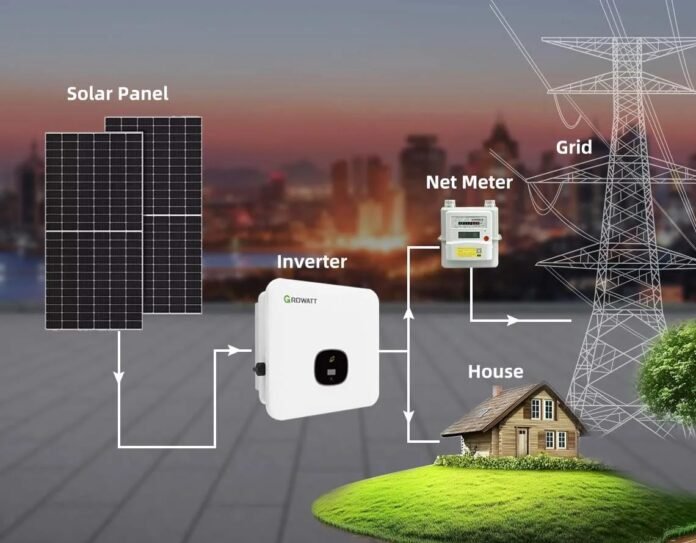
Grid-tied solar power systems allow solar users to generate electricity from the sun while still staying connected to the local utility grid. During periods of high solar production, excess power can flow back into the grid. When solar production drops, your home simply pulls power from the utility grid. While this setup is convenient and efficient, providing a safety net that prevents solar users from falling short of their energy needs, the benefits can vary depending on your local utility company’s policies. Every city, utility provider, and state can have different rules about how excess solar energy is credited.
It’s important to understand your area’s specific policies before you invest in a solar power system, but below is an overview of the different types of policies and programs commonly used.
Net Metering
Net metering is a familiar compensation method for grid-tied solar systems. Under a traditional net metering program, the excess electricity you send to the grid earns credits that offset the electricity you use later, such as after sunset or on cloudy days. In many cases, these credits are a watt-for-watt exchange, essentially allowing solar users to “bank” their excess solar during the day for later use. It’s sort of like using the utility grid as your own personal battery bank.
This method is the most beneficial, allowing you to get full value for every kilowatt-hour you export. This can significantly improve the long-term financial return on your solar power system, because not a single watt goes to waste. However, one-to-one net metering has become less common in some areas as more and more solar power systems have become connected to the grid.
Buy-Back Programs
Many utility companies have now transitioned to buy-back programs instead of traditional net metering. With a buy-back program, exported electricity is purchased by the utility company at a predetermined rate, which is usually significantly lower than what you would pay when purchasing electricity from the grid.
For example, you might pay $0.20 per kilowatt-hour when using electricity from the grid. But when the grid purchases your excess solar from you during the day, you may only get $0.10 per kilowatt-hour. While this does significantly reduce the amount you’re paying to the grid, it also means that you’re “buying back” the power your system generated at double the rate that you were paid for it. Some people find this reduced benefit to be good motivation to get a solar battery bank, so they can store their excess power to use later, instead of buying it back from the grid.
Why Local Policies Matter
There’s no universal standard for how utility companies compensate solar customers (and in fact, some cities don’t buy back excess solar at all). Your area’s policies for handling excess solar power can directly impact important decisions about your solar power system, such as whether or not to install a battery bank, and even how many Mission solar panels to install on your home. Be sure to research the policies of your city thoroughly before designing and installing a system.