


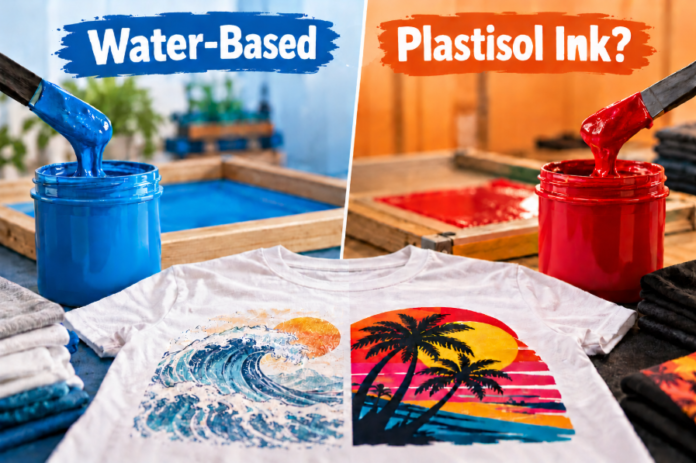
You have a great design, the right T-shirt, and a clear idea of how you want the final print to look. Now comes an important decision: should you use water-based ink or plastisol ink? The choice can affect everything from color brightness and fabric feel to production time and wash durability.
Both inks are popular in screen printing, but each has its own strengths. Understanding how they work will help you choose the right option for your next project, whether you’re printing custom apparel, launching a clothing brand, or creating merchandise for an event.
Understanding Water-Based Screen Printing Ink
Water-based ink is a popular choice for screen printers who want a soft, lightweight finish. It uses water as its primary carrier and can allow the color to become part of the fabric’s texture rather than forming a thick layer on top.
This makes it suitable for designs where comfort matters as much as appearance. For example, clothing brands that produce everyday T-shirts often prefer water-based ink for its smooth feel and natural finish.
Another advantage is its suitability for certain detailed and vintage-inspired designs. It can work particularly well on light-colored cotton garments, where the fabric helps create a clean, understated look.
However, water-based ink requires attention during printing. It can dry in the screen if left exposed for too long, especially in warm conditions. Printers also need to manage moisture removal and follow the manufacturer’s curing instructions to achieve durable results.
What Makes Plastisol Ink a Popular Choice?
Plastisol ink is widely used in the screen printing industry because it produces vibrant colors and strong coverage. Unlike water-based ink, it generally sits on the surface of the fabric, creating a more noticeable printed layer.
One of its biggest advantages is its ability to produce bright graphics on dark garments. This makes it a practical option for company logos, sportswear, promotional apparel, and colorful designs that need to stand out.
Plastisol is also convenient for longer printing sessions because it does not normally dry in the screen under ordinary working conditions. This gives printers more flexibility when managing production.
The main consideration is the finished texture. Heavy ink deposits can feel thick or stiff, although the right ink, screen setup, and printing technique can help produce a softer result. Plastisol also requires appropriate cleaning products and careful temperature control during curing.
Water Based Ink vs Plastisol: What Should You Consider?
When comparing water based ink vs plastisol, focus on the results you want rather than assuming one option is always better.
Water-based ink is often the better choice when a soft hand feel is a priority. It works well for minimalist graphics, subtle artwork, and designs where the natural texture of the garment should remain noticeable.
Plastisol is a strong option when you need bold colors, dependable opacity, and clear graphics on dark fabrics. It is particularly useful for designs that require noticeable contrast or consistent coverage across multiple garments.
Your printing equipment also matters. If you’re new to screen printing, consider which ink you can handle and cure correctly with your existing setup. A small test run can help you evaluate the finish before committing to a large batch.
Choosing the Right Ink for Your T-Shirt Design Ideas
Your artwork can tell you a lot about which ink to use. Before starting production, think about the design’s colors, the garment’s shade, and the overall look you want to achieve.
For soft, understated graphics, water-based ink can be an excellent match. Imagine a simple line illustration, a nature-inspired print, or a vintage graphic on a light cotton T-shirt. A softer finish can complement these designs without making the printed area feel too heavy.
For bold t shirt design ideas, plastisol may be more suitable. Bright lettering, colorful illustrations, and high-contrast logos can benefit from its strong coverage, particularly when printing on black, navy, or other dark garments.
You don’t have to follow these choices as strict rules. Modern ink formulations offer different finishes and performance characteristics. Testing both ink types on your chosen fabric can reveal which one delivers the look you want.
Don’t Ignore Fabric Compatibility and Curing
Choosing the right ink is only part of producing a quality print. The fabric and curing process also play important roles in the final result.
Cotton is a common choice for water-based printing because it can produce a comfortable, soft-feeling finish. Plastisol can work across a range of garments, but polyester and blended fabrics may require specialized inks to reduce the risk of dye migration or other printing problems.
Curing is equally important. Both ink types need to reach the manufacturer’s specified conditions to develop the expected durability. Water-based ink requires proper moisture removal and curing, while plastisol must reach its required temperature throughout the ink deposit.
Skipping these steps can lead to cracking, fading, or prints that do not withstand repeated washing. Always follow the product instructions and test wash durability before printing a large order.
How to Choose the Best Screen Printing Ink
If you’re unsure which ink to choose, start by answering three simple questions.
First, consider the garment. Check the fabric composition and make sure the ink is suitable for the material.
Next, decide how the print should look and feel. Choose water-based ink when a soft, lightweight finish is important, or consider plastisol when strong color coverage is your priority.
Finally, think about your production setup. Your curing equipment, printing experience, cleaning process, and production volume can all influence which ink is more practical.
Beginners may find plastisol easier to manage because it generally stays wet in the screen during production. Water-based ink is worth considering when the desired finish justifies the extra attention needed for screen maintenance and curing.
Make Your Next Print Count
The right screen printing ink depends on your design, fabric, equipment, and expectations. Water-based ink offers a soft, natural feel, while plastisol provides vibrant colors and reliable coverage for many types of apparel.
Take time to test your options before starting a full production run. Compare the color, texture, and wash performance on the actual garment you plan to use.
With the right ink and printing process, you can create T-shirts that look good, feel comfortable, and meet your customers’ expectations.