



Table of Contents
- Why Storm Damage Can Worsen After the Sky Clears
- Step One: Wait for Official Clearance
- Step Two: Complete a Careful First Inspection
- Step Three: Document Everything Before Cleanup
- Step Four: Protect the Property From Further Damage
- Step Five: Contact Insurance and Keep a Paper Trail
- Step Six: Remove Water and Dry Wet Materials
- Step Seven: Clean Up Without Creating New Hazards
- When to Call a Professional
- Common Questions About Storm Recovery
- Ways to Make a Salt Lake City Home More Storm-Ready
- Conclusion
Salt Lake City homeowners can face fast-changing conditions, from strong winds and hail to heavy rain, roof leaks, and basement water intrusion. After the weather clears, the safest recovery begins with a calm plan, not a rushed cleanup. If the damage is beyond a small, safe task, professional storm damage restoration in Salt Lake City can help secure a property and address water, debris, and structural concerns.
Every storm is different, but the priorities remain the same: protect people first, document the loss, prevent additional damage where it is safe to do so, and keep careful records for insurance and repair decisions.
Why Storm Damage Can Worsen After the Sky Clears
A missing shingle, cracked window, damaged gutter, or lifted section of siding can leave a home exposed to the next round of rain. Water that enters through a small opening may affect drywall, insulation, flooring, cabinets, and belongings. Moisture can also remain inside walls, beneath flooring, or in crawl spaces after surfaces appear dry.
Wind-related debris and fallen branches can create additional hazards around homes in Salt Lake City neighborhoods. Broken glass, sagging ceilings, loose exterior materials, and standing water near the foundation deserve attention, but speed should never come before personal safety.
Step One: Wait for Official Clearance
Do not return to a storm-damaged property until local emergency officials have indicated it is safe to do so. Stay away from floodwater when possible, and never touch downed power lines, damaged electrical equipment, or objects in contact with a line.
- Leave immediately if you smell gas, hear a hissing sound, see smoke, or notice shifting walls or ceilings.
- Keep children and pets away from damaged rooms, debris piles, and standing water.
- Use a flashlight for a dark home rather than candles or an open flame.
- Do not turn electricity back on if water may have reached outlets, appliances, the panel, or wiring.
Step Two: Complete a Careful First Inspection
Start from a safe distance and look for visible warning signs. The first inspection is for identifying hazards and recording conditions, not for climbing, lifting, or making major repairs.
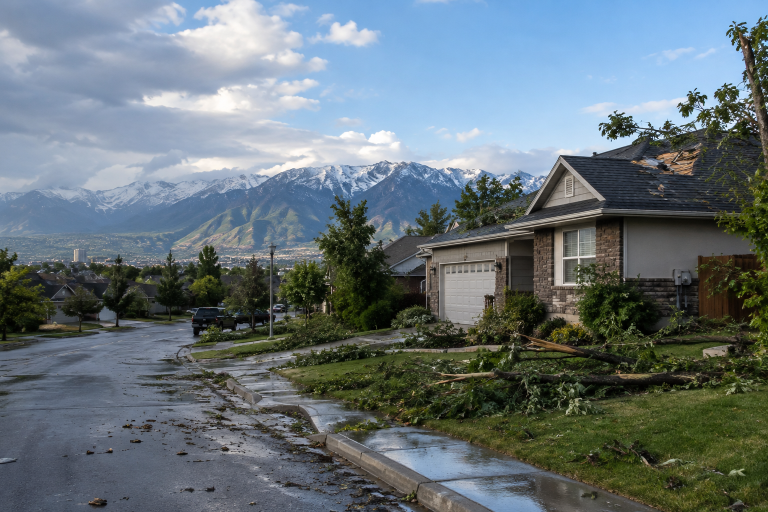
Exterior Warning Signs
- Missing, lifted, or scattered roofing materials
- Cracked masonry, a shifted chimney, or loose gutters
- Broken windows, damaged doors, siding, fences, or fixtures
- Large branches resting on the roof or near utility equipment
- Pooling water around the foundation or basement entry
Interior Warning Signs
- Ceiling stains, bubbling paint, or sagging drywall
- Wet flooring, damp insulation, swollen trim, or musty odors
- Cracks near windows, doors, walls, or the foundation
- Tripped breakers, flickering lights, damaged outlets, or unusual sounds
Step Three: Document Everything Before Cleanup
Clear documentation can make it easier to explain the loss to an insurer and compare repair recommendations later. Take wide photos of each affected room and exterior area, then capture close-up images of damaged materials and belongings. Record a slow walkthrough video, photograph appliance model and serial numbers, and make a written inventory of damaged or missing items.
The steps for recovering from flood damage include taking photos and videos before cleanup, recording appliance serial numbers, and retaining samples of damaged materials when appropriate. Save receipts for emergency supplies, temporary lodging, cleanup, and temporary repairs.
Step Four: Protect the Property From Further Damage
Take reasonable temporary steps only when they can be completed safely. Move dry belongings away from active leaks, place containers beneath drips, and close off damaged areas from children and pets. A small, accessible opening may be covered temporarily, but steep roofs, major openings, fallen trees, exposed wiring, and extensive water damage should be handled by trained professionals.
Step Five: Contact Insurance and Keep a Paper Trail
Notify the insurance company as soon as practical, even if the full scope of damage is still unclear. Keep the claim number, adjuster contact details, claim instructions, photos, receipts, and estimates together. Ask what documentation is needed, what deductibles may apply, and whether emergency work needs approval. Do not discard damaged property until the insurer provides guidance, unless it creates an immediate health or safety risk.
Step Six: Remove Water and Dry Wet Materials
Once the home is safe to enter and the electrical system is not a concern, begin removing water and improving airflow. Move wet belongings to a dry, ventilated location, open windows when outdoor conditions permit, and use fans or dehumidifiers only when it is safe. Separate items that may be cleaned from items that are contaminated or deteriorating.
Surface dryness is not proof that a building is dry. Moisture can remain behind walls, under flooring, above ceilings, and in insulation, where it may later cause odors, staining, or mold growth. A qualified professional can check concealed areas when widespread water intrusion has occurred.
Step Seven: Clean Up Without Creating New Hazards
- Wear sturdy shoes, gloves, eye protection, and appropriate respiratory protection.
- Use caution around sharp debris, spoiled food, sewage, chemicals, and damaged appliances.
- Never mix bleach with ammonia or other household cleaners.
- Avoid using generators, chainsaws, or ladders unless you are trained and conditions are safe.
- Take breaks, drink water, and do not lift heavy debris alone.
The storm safety guidance for returning home emphasizes avoiding downed wires, using protective equipment during cleanup, and waiting for official direction before reentering an affected area.
When to Call a Professional
Bring in qualified help when there is possible electrical exposure, major roof damage, sagging ceilings, shifted walls, foundation movement, contaminated water, or a large tree limb on a structure or power line. For large repair projects, request written scopes of work and payment schedules, verify licensing and insurance where applicable, compare estimates, and avoid anyone who pressures you to sign immediately or demands a large payment before meaningful work begins.
Common Questions About Storm Recovery
How soon should a damaged home be inspected?
Inspect it as soon as it is safe, especially if there are roof leaks, standing water, broken windows, or signs of structural damage.
Can damaged items be thrown away?
Photograph items first. Unsafe, perishable, or contaminated materials may need disposal, but check with the insurer when possible before removing other damaged property.
Does homeowners insurance cover every type of storm damage?
Coverage depends on the policy, the cause of loss, exclusions, deductibles, and whether separate flood insurance applies. Review the policy and ask the insurer for claim-specific guidance.
Ways to Make a Salt Lake City Home More Storm-Ready
- Keep gutters, drains, and downspouts clear.
- Trim weak or overhanging branches when conditions allow.
- Store important documents in a waterproof container and maintain digital backups.
- Photograph valuable belongings before storm season.
- Learn how to safely shut off water, gas, and electricity.
- Keep batteries, chargers, medications, flashlights, and basic supplies accessible.
Conclusion
Storm recovery is more manageable when each decision follows the right order. Wait for clearance, identify hazards, document the damage, limit further loss, contact insurance, and seek qualified help for dangerous or complex work. That methodical approach can help Salt Lake City households move from an emergency toward a safer and more complete recovery.
