


Key Takeaways
- Advancements in cleanroom technology are enhancing contamination control and operational efficiency.
- Modular cleanroom solutions offer flexibility and rapid deployment for various industries.
- Integrating advanced safety measures ensures compliance with stringent industry standards.
Table of Contents
- Introduction
- Modular Cleanroom Solutions
- Advanced Safety Measures
- Integration of Utility Systems
- Compliance with Industry Standards
- Case Studies
- Future Trends
- Conclusion
Introduction
In industries where precision and sterility are non-negotiable, such as pharmaceuticals, electronics, and biotechnology, innovations in cleanroom technology and industrial safety are crucial to maintaining high product quality standards. The need for reliable contamination control has sparked a wave of new solutions that emphasize both operational efficiency and regulatory compliance. Organizations seeking to remain competitive have begun to embrace new technologies and practices designed to exceed previous industry benchmarks. Sourcing trusted cleanroom supplies that support these new developments is a critical first step for many companies.
With the proliferation of precision manufacturing and advanced research, cleanrooms are more important than ever before. As industries grow more complex, cleanroom environments must evolve to address not only microbial and particulate control but also ergonomics, modularity, and cost efficiency. The ability to swiftly respond to new production demands and regulatory changes is enabled by modern cleanroom solutions that streamline processes and enhance safety protocols from the ground up.
This article explores leading-edge trends and practical insights into cleanroom design, modular construction, safety innovations, and compliance strategies. By leveraging the latest advancements, manufacturers and research facilities can maintain competitive advantages in their respective fields. Decision-makers and facility managers are increasingly prioritizing systems that seamlessly integrate both safety and utility enhancements, ensuring ongoing process stability and regulatory adherence.
Industry leaders and regulatory organizations frequently update best-practice guidelines, prompting facility designers and operators to remain vigilant and proactive. From automated entry systems to purpose-built airlocks, the scope of available technology is broad and dynamic, making ongoing education and careful supplier selection central to success. For those seeking further insight into cleanroom trends, the U.S. Food and Drug Administration offers comprehensive resources.
Modular Cleanroom Solutions
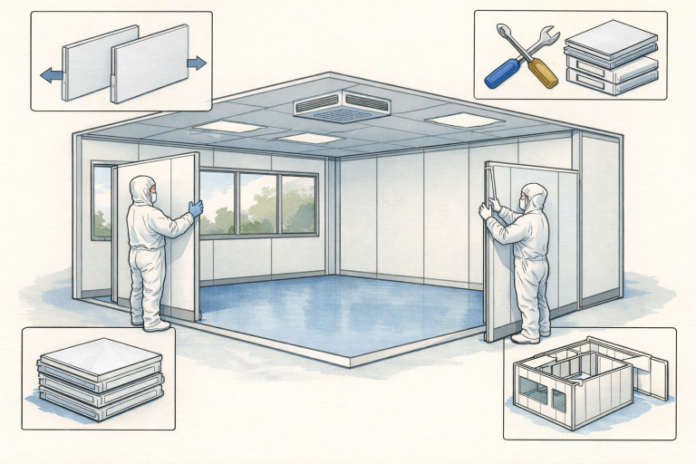
Conventional cleanroom construction is often time-intensive and inflexible, making it challenging for growing businesses or projects that require temporary solutions. Modular cleanrooms have addressed these drawbacks by providing fully customizable, prefabricated units that can be assembled and scaled with minimal disruption to ongoing operations. These next-generation solutions are designed to meet industry-specific requirements, including variable ISO class levels and process accommodations.
The primary advantage of modular cleanrooms lies in their rapid deployment and reconfiguration capabilities. Companies can add or remove sections, update HVAC systems, or install new technologies with reduced downtime and lower costs compared to traditional brick-and-mortar builds. Industries as diverse as semiconductor manufacturing and pharmaceutical compounding are adopting modular solutions to maximize both flexibility and efficiency.
Customization and Scalability
One of the hallmarks of modern modular cleanrooms is the ability to tailor each space to precise inventory, operational, and regulatory needs. This degree of adaptability allows facilities to evolve in response to shifts in business models or market demands, with future-proofing options such as plug-and-play utilities and easily upgradable filtration systems supporting sustained growth.
Advanced Safety Measures
Safety remains paramount in cleanroom environments. While protocols around gowning, glove use, and laminar airflow have long been staples, today’s facilities are incorporating layered strategies that combine established procedures with new technologies. Automated personnel-detection cameras and sensors can verify proper attire and restrict access to non-compliant individuals, greatly reducing the risk of contamination events.
Specialized protective equipment, customized PPE, and real-time monitoring devices further enhance both worker welfare and product integrity. These innovations help create a culture of vigilance and accountability. Comprehensive training and feedback mechanisms, when combined with cutting-edge safety systems, can dramatically limit costly deviations and ensure regulatory readiness at all times.
Integration of Utility Systems
The integration of utility systems, such as heating, ventilation, compressed air, and process gases, is essential for optimizing workflow and facility safety. Off-site-manufactured utility walls and vertical utility corridors enable the strategic placement of these critical systems, preserving valuable floor space and ensuring robust segregation of high-risk zones.
Advanced utility integration enables streamlined maintenance and faster troubleshooting, reducing downtime. Modern modular cleanrooms often incorporate sensor-driven controls and data integration, providing facility managers with real-time insights into system performance, supporting preventive maintenance, and maximizing operational uptime.
Compliance with Industry Standards
Strict adherence to regulatory frameworks such as ISO 14644 and Good Manufacturing Practice (GMP) is crucial for cleanroom operations. These standards dictate everything from air quality and personnel hygiene to material selection and documentation processes. Facilities that work proactively to stay ahead of evolving guidelines reduce their risk of costly recalls or workflow disruptions.
Utilizing certified materials, automated compliance checks, and rigorous documentation ensures that every aspect of the cleanroom meets third-party audit standards. Digital recordkeeping and environmental monitoring provide additional layers of security and traceability, making it easier to demonstrate compliance to inspectors and clients alike.
Case Studies
Many organizations have achieved high levels of performance and compliance by integrating advanced cleanroom technology and modular solutions. One prominent example involves a pharmaceutical manufacturer that adopted a modular airlock system for its new production line. This innovation facilitated faster gowning, improved staff flow, and significantly reduced contamination incidents, resulting in increased batch yield and greater regulatory confidence.
Another case saw a semiconductor assembly facility implement real-time particulate monitoring and automated alarm systems, resulting in a measurable reduction in product defects and improved equipment efficiency. These case studies underscore the practical impact of modern cleanroom strategies in competitive industries.
Future Trends
The cleanroom of the future will likely feature even greater automation, modularity, and smart integration. Augmented reality protocols for training, AI-driven predictive maintenance, and the continuous evolution of filtration and sensor technology all point toward facilities that are more adaptable and data-driven. With the rapid pace of change, ongoing investment in both technology and staff training will be the hallmark of industry leaders.
As regulatory expectations continue to rise and industries become increasingly interconnected globally, cleanrooms must support greater flexibility, security, and compliance across every aspect of their operations. These developments will empower organizations to address both emerging risks and opportunities proactively.
Conclusion
In an era defined by rapid technological advancement and tightening regulatory controls, innovative approaches to cleanroom solutions and industrial safety are more important than ever. Embracing modular construction, advanced safety technologies, and integrated utility systems not only keeps facilities competitive but also ensures the highest standards of product integrity. Continuous improvement, strategic investment, and vigilant adherence to best practices will define success in maintaining the next generation of clean environments.