


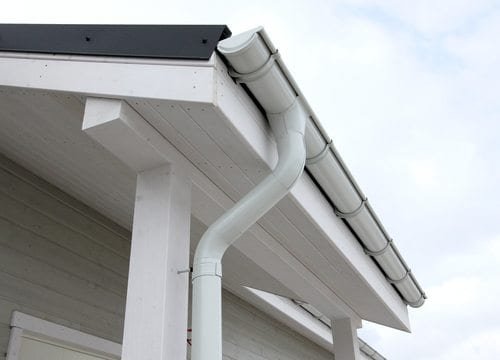
A gutter system does more than collect rainwater from the roof. Its real purpose is to control where that water ultimately ends up. While gutters receive most of the attention, downspouts are equally important because they carry concentrated roof runoff from the gutter system to ground level. If they are incorrectly positioned or discharge too close to the house, even perfectly clean gutters may contribute to foundation and basement moisture problems.
For homeowners in Connecticut and Westchester County, where periods of heavy rainfall can saturate the ground quickly, proper drainage is particularly important. Experienced professionals such as Elite Gutter Care can evaluate gutter and downspout placement as a complete system, helping ensure that roof runoff is collected efficiently and discharged where it is less likely to threaten the foundation.
What Does a Downspout Actually Do?
During rainfall, a roof collects water across a large surface area and channels it toward the edges. Gutters capture this runoff and direct it into downspouts.
The downspout then carries the water vertically toward the ground.
This means a relatively small discharge point may handle water collected from a substantial section of roof. During a strong storm, the volume can be significant.
If that water is released directly beside the foundation, the soil surrounding the house may become repeatedly saturated.
Proper downspout placement is therefore not simply about appearance. It is an essential part of controlling water around the property.
Why Water Near the Foundation Is a Problem
Soil naturally absorbs rainwater, but there is a limit to how much moisture it can handle.
When roof runoff is repeatedly concentrated in one location beside the house, the surrounding ground may remain saturated much longer than areas exposed only to normal rainfall.
Over time, this can contribute to:
- soil erosion;
- standing water;
- basement moisture;
- damp foundation walls;
- deterioration of exterior materials;
- movement of soil around the structure.
The exact consequences depend on soil type, grading, foundation construction, and local drainage conditions.
Preventing excessive water accumulation is generally much easier than correcting moisture problems after they develop.
Downspouts Should Move Water Away from the House
A downspout that ends directly beside the foundation may technically be functioning, but the drainage system is only doing half of its job.
Water needs to be carried away from vulnerable areas.
This is commonly achieved through downspout extensions, splash blocks, or other drainage solutions appropriate for the property.
The goal is to prevent roof runoff from immediately soaking into the ground next to basement or foundation walls.
How far water should be discharged depends on several factors, including:
- property slope;
- soil conditions;
- landscaping;
- roof size;
- available drainage areas.
There isn’t one universal configuration that works for every home.
Property Grading Matters Too
Proper downspout placement works best when the surrounding landscape supports natural drainage.
Ideally, the ground near the house should slope away from the foundation.
If the landscape slopes toward the building, water discharged several feet away may simply flow back toward the house.
Homeowners should watch for low areas where water remains after storms. These locations can reveal grading problems that interfere with otherwise functional gutters and downspouts.
Soil can also settle over time, meaning drainage conditions around an older property may be different from when the home was originally built.
The Number of Downspouts Is Important
Placement isn’t only about deciding where water reaches the ground. A gutter system must also have enough downspouts to handle the volume of water coming from the roof.
If too much gutter area drains into a single downspout, the system may struggle during heavy rainfall.
Possible warning signs include:
- gutters overflowing near the middle of long runs;
- water backing up around downspout openings;
- unusually slow drainage;
- repeated overflow despite clean gutters.
Adding or repositioning downspouts can sometimes improve drainage without requiring replacement of the entire gutter system.
Avoid Discharging Water onto Walkways
A poorly positioned downspout can create problems even when it successfully moves water away from the foundation.
For example, directing water across a walkway or driveway may create slippery conditions.
During Connecticut winters, discharged water can freeze and create patches of ice.
Repeated runoff may also stain paved surfaces or contribute to erosion along walkway edges.
A properly planned system considers both structural protection and how water moves through frequently used areas of the property.
Landscaping Can Affect Downspout Performance
Trees, shrubs, flower beds, retaining walls, and other landscape features influence drainage.
Large amounts of roof runoff can wash away mulch, damage plants, or erode soil if discharged directly into landscaped areas.
At the same time, dense vegetation can sometimes hide drainage problems from view.
Homeowners should periodically inspect areas around downspout outlets and look for:
- washed-out soil;
- exposed plant roots;
- displaced mulch;
- persistent puddles;
- channels created by flowing water.
These signs indicate that the current discharge location may need improvement.
Keep Downspouts Clear
Correct placement won’t help if the downspout is clogged.
Leaves and other debris can become trapped inside downspout elbows, restricting water flow and causing gutters to back up.
Regular gutter maintenance should therefore include checking downspouts rather than simply removing visible debris from the gutter channel.
A functioning downspout should allow water to move freely from the roofline to its intended discharge point.
Watch the System During Heavy Rain
One of the easiest ways to evaluate drainage is to observe the property during or shortly after a storm.
From a safe location at ground level, homeowners can look for:
- overflowing gutters;
- slow downspout drainage;
- water collecting beside the foundation;
- runoff flowing back toward the house;
- erosion near discharge points;
- large puddles that remain after rainfall.
Problems that are difficult to identify during dry weather often become obvious once the system is handling significant water volume.
Seasonal Conditions Can Change Drainage Needs
Connecticut’s climate creates different challenges throughout the year.
Autumn leaves can block downspouts. Winter ice can obstruct outlets or damage extensions. Spring rains may reveal areas where soil has settled, while intense summer storms can test the maximum capacity of the system.
Seasonal inspections help ensure downspouts remain connected, unobstructed, and correctly positioned.
This is particularly important after severe storms or exterior landscaping work that may have changed drainage patterns around the property.
Final Thoughts
A gutter system isn’t truly effective unless it carries water all the way from the roof to a safe discharge location. Downspouts that are poorly positioned, clogged, undersized, or directed toward the foundation can undermine the performance of an otherwise functional gutter system.
Homeowners should consider gutter and downspout drainage as one connected system and periodically evaluate how water moves across the entire property. For homes throughout Connecticut and Westchester County, Elite Gutter Care can inspect gutters, downspouts, and drainage conditions to identify improvements that help direct roof runoff away from foundations and other vulnerable areas.