


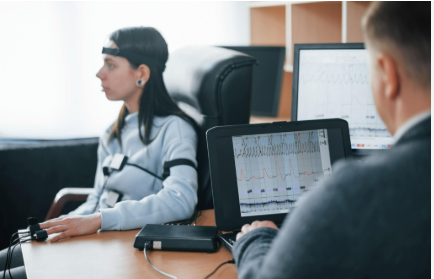
There’s something about a polygraph test that makes people uneasy. Maybe it’s the wires. Maybe it’s the idea that a machine could somehow “see” through you. Or maybe it’s all the courtroom dramas where someone breaks under pressure and the needle starts jumping.
Here’s the thing, though: a polygraph doesn’t actually detect lies.
That might sound surprising, especially if you’ve grown up thinking it’s a truth machine. It isn’t. What it does measure—and how people interpret those measurements—is where things get interesting.
Let’s unpack it in a way that makes sense without the jargon.
What a Polygraph Actually Tracks
At its core, a polygraph records physical responses. Nothing mystical about it. You’re hooked up to sensors that track things like your heart rate, breathing patterns, blood pressure, and skin conductivity (basically how much you’re sweating).
The idea is simple: when people lie, they might feel stress or anxiety. That stress shows up in the body. The machine records those changes.
But here’s where it gets messy.
Stress doesn’t equal lying.
Imagine being asked a serious question in a high-pressure setting, even if you’re telling the truth. Your heart might still race. Your breathing might shift. Your palms might sweat. Not because you’re lying—but because you’re human.
Now flip it. Someone who’s calm, practiced, or simply not bothered by lying might show very little reaction.
So the machine records reactions. A human examiner interprets them. And that interpretation is where things can go sideways.
A Quick Walkthrough of the Process
If you’ve never seen a polygraph test outside of TV, the real thing is slower and more methodical.
You don’t just walk in, get hooked up, and start answering dramatic yes-or-no questions.
There’s usually a pre-test interview first. This part matters more than people realize. The examiner talks through the questions, explains the process, and builds a baseline understanding of how you respond.
For example, they might ask obvious questions like:
“Is your name John?”
“Are you sitting down right now?”
These aren’t trick questions. They’re used to measure your normal physiological responses when telling the truth.
Then come comparison questions—slightly uncomfortable ones that most people would feel uneasy answering, even if they haven’t done anything wrong. Think along the lines of:
“Have you ever lied to get out of trouble?”
Almost everyone has. That’s the point.
Finally, there are the relevant questions—the ones that actually matter for the investigation or situation.
The examiner compares your reactions across these categories. If your body reacts more strongly to the relevant questions than the comparison ones, it may be flagged as deception.
Notice the word “may.” Nothing about this is absolute.
Why People Still Believe in It
Given all that uncertainty, you’d expect polygraphs to have faded away by now. But they haven’t.
Part of it is psychological.
Sitting in a chair, wired up, being told that your honesty is being measured—it creates pressure. A lot of it. Some people confess before the test even really starts, just because they assume they’ll be caught.
That alone makes the polygraph useful in certain settings.
There’s also the perception of authority. When something looks scientific, people tend to trust it more. Charts, sensors, official language—it all adds weight, even if the underlying method isn’t as solid as it seems.
And to be fair, experienced examiners can pick up on patterns. Not because the machine is magic, but because they’ve seen how people behave under questioning over time.
Still, that doesn’t turn it into a reliable lie detector.
Where Polygraphs Are Used Today
You’ll still find polygraph tests in a few specific areas.
Law enforcement agencies sometimes use them during investigations or hiring processes. Certain government positions, especially in intelligence or national security, may require them as part of background checks.
Then there’s the private side. Employers in some industries use them, though this is heavily restricted in many places. And occasionally, you’ll hear about them being used in personal situations—like couples trying to settle trust issues.
That last one tends to end badly.
Imagine a relationship already on shaky ground, then adding a high-stress test that can be misinterpreted. Even if the result says “truthful,” doubt can linger. If it says “deceptive,” things can spiral quickly, regardless of what actually happened.
It’s not exactly a recipe for clarity.
The Accuracy Debate
Ask ten experts about polygraph accuracy, and you’ll get ten different answers.
Some claim it’s around 80–90% accurate under ideal conditions. Others argue it’s barely better than chance in real-world settings.
The truth probably sits somewhere in between, but here’s the key point: it’s not reliable enough to be treated as definitive proof.
That’s why many courts don’t accept polygraph results as evidence. Not because they’re useless, but because they’re too uncertain.
Think of it like this. If a tool can be wrong often enough to affect outcomes, relying on it for serious decisions becomes risky.
And with polygraphs, there are a lot of variables:
– The examiner’s skill
– The subject’s mental state
– The way questions are phrased
– The environment
– Even things like fatigue or medication
All of these can influence the results.
Can People Beat a Polygraph?
Short answer: sometimes, yes.
Longer answer: it’s not as simple as movies make it seem, but it’s not impossible either.
Some people try physical tricks—like subtly tensing muscles or controlling their breathing during certain questions. Others use mental techniques, like deliberately stressing themselves during baseline questions to throw off comparisons.
Then there are people who don’t need tricks at all. Individuals who are naturally calm under pressure, or who don’t feel guilt in the usual way, might not show the expected stress responses.
On the flip side, honest people can “fail” simply because they’re anxious.
Picture someone who’s terrified of being misunderstood. They care deeply about the outcome. Every question feels loaded. Their body reacts strongly—even when they’re telling the truth.
The machine doesn’t know the difference between fear of being caught lying and fear of being wrongly judged.
That’s a big limitation.
A Small Scenario That Says a Lot
Imagine two people taking the same test.
Person A is guilty but composed. They’ve thought through their answers, they stay steady, and they don’t let their emotions spike.
Person B is completely innocent but nervous. Maybe they’ve never been in trouble before. The whole setup makes them anxious.
Now they’re both asked the key question.
Person A shows minimal reaction.
Person B shows a noticeable spike.
If you’re relying purely on physiological data, Person B might look more deceptive—even though they’re telling the truth.
That’s not a rare edge case. It’s a fundamental challenge of the method.
Why It Still Has Value (Sometimes)
Despite all its flaws, the polygraph isn’t entirely useless.
It can be a tool—just not a standalone answer.
In investigations, it might help guide questioning or highlight areas worth exploring further. In screening processes, it can act as one piece of a larger puzzle.
And psychologically, it can prompt disclosures. People who believe the test will expose them may choose to come clean beforehand.
But relying on it as a final judgment? That’s where problems start.
The Human Element Matters More Than the Machine
One thing that often gets overlooked is the role of the examiner.
A skilled examiner isn’t just watching the machine. They’re observing behavior, listening to tone, noticing inconsistencies. The polygraph data is just one layer.
In a way, the test is as much about conversation as it is about measurement.
That doesn’t eliminate the risks, but it explains why outcomes can vary so much depending on who’s conducting the test.
Two different examiners might interpret the same data differently. That alone should make anyone cautious about treating the results as objective truth.
So, Should You Trust a Polygraph?
It depends on what you mean by “trust.”
If you’re asking whether it can offer clues or raise useful questions, sure. It can.
If you’re asking whether it can definitively tell you whether someone is lying, the answer is no.
It’s not a lie detector. It’s a stress detector, interpreted by a human.
And stress is complicated.
People get nervous for all sorts of reasons. Some lie without much stress at all. That gap between emotion and truth is where the polygraph struggles.
The Takeaway
The polygraph test sits in an odd space—part science, part psychology, part theater.
It looks authoritative. It feels serious. And in certain contexts, it can influence behavior in useful ways.
But strip it down, and it’s measuring signals that don’t map cleanly to truth or deception.
That doesn’t make it worthless. It just means it shouldn’t be treated as the final word.
If you ever find yourself facing one, it helps to understand what’s really happening. Not a machine reading your mind—but a system interpreting how your body reacts under pressure.
And that’s a much messier story than the one most people expect.